Anne Teresa De Keersmaeker and Steven Fillet As you wish
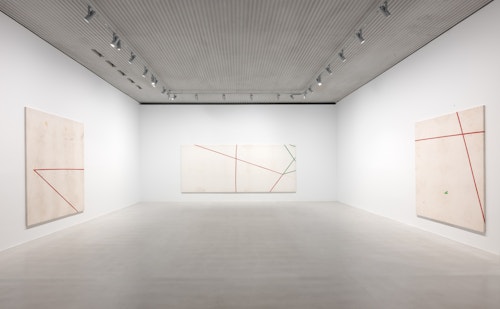
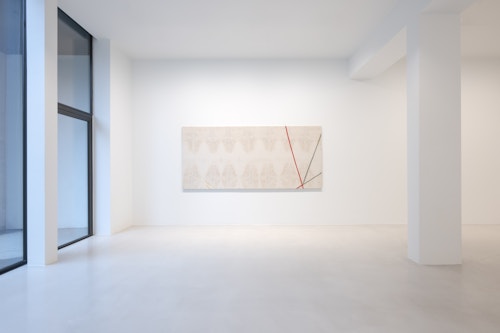
Since 2015, Anne Teresa De Keersmaeker has been bringing dance from the black box into the white cube: from opening The Tanks at Tate Modern with Fase, Four Movements to the Music of Steve Reich, and Work/Travail/Arbeid at WIELS, Centre Pompidou, Tate Modern, and MoMA, to Dark Red at Fondation Beyeler and Neue Nationalgalerie, Forêt at the Louvre, and many more. From 5 to 14 February 2026, De Keersmaeker will present the exhibition As you wish at Xavier Hufkens together with visual artist Steven Fillet—the first in a series of collaborations between the two artists. The exhibition will feature collaborative paintings and works on paper, accompanied by a series of solo performances entitled Insomnia by De Keersmaeker.
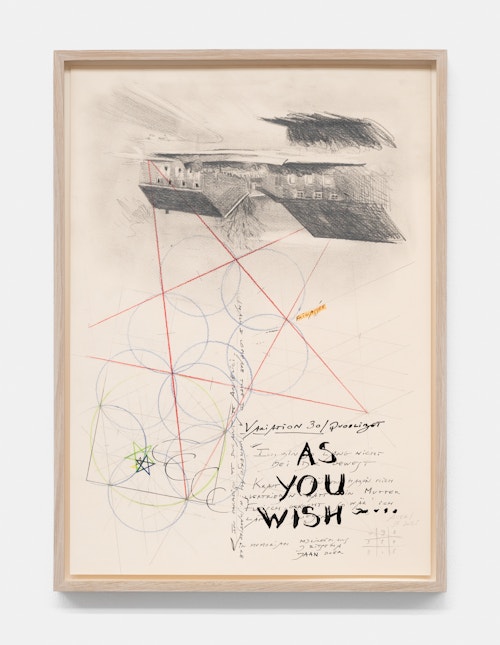
The exhibition title As You Wish—from the Latin quodlibet, literally meaning “whatever you want”—takes its name from Johann Sebastian Bach’s Goldberg Variations BWV 988, which not only provide the overarching framework for this project but also reflect the rhythms, structures, and sensibilities through which life and work are intertwined for both artists. Bach’s final, thirtieth variation bearing the same name: an unexpected ending to one of the most remarkable keyboard works ever written. Two folk songs (“Ich bin so lang nicht bei dir g’west…” and “Kraut und Rüben haben mich vertrieben hätt’ mein’ Mutter Fleisch gekocht, so wär’ ich länger blieben…”)¹ dance over the foundational bass line. It is as if everything that came before dissolves into something lighter and more familiar—a kind of homecoming. Some see in this a glimpse into the Bach household, where music was never segregated, but a constant, ever-present fact of life.
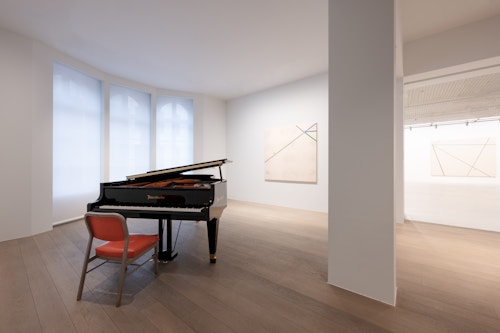
The Goldberg Variations were originally composed by Bach for harpsichord: an aria with thirty variations written between 1741 and 1745. According to Bach’s first biographer, Johann Nikolaus Forkel, the work was commissioned by Count Hermann Carl von Keyserling, the Russian ambassador to Saxony, who employed the young Johann Gottlieb Goldberg to play “delicate, spirited music” at night to ease his insomnia. The context inspired the the title Insomnia for the performances with De Keersmaeker and Franco at the gallery, which strongly emphasizes the ideas of horizontality and verticality, suggesting a choreography that emerges from horizontal to vertical in relation to the paintings.
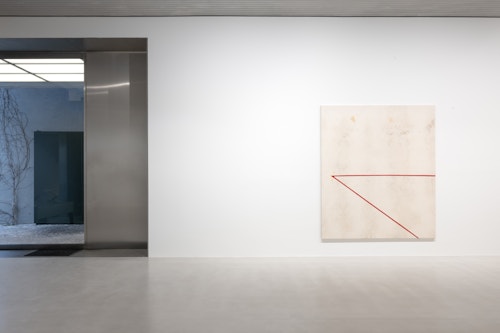
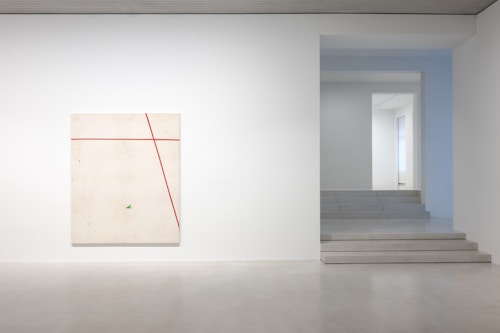
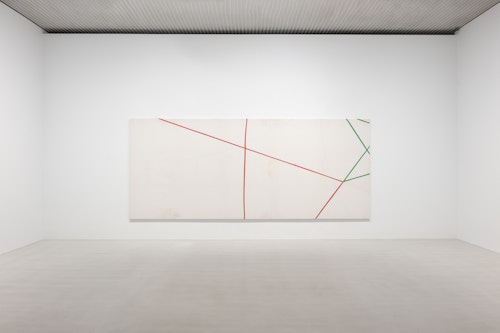
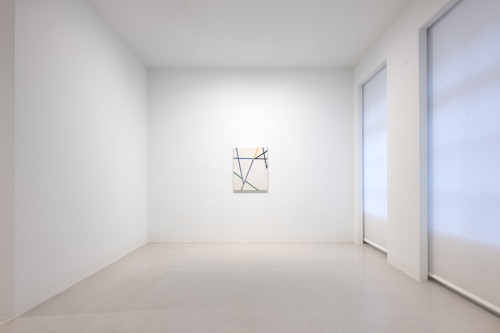
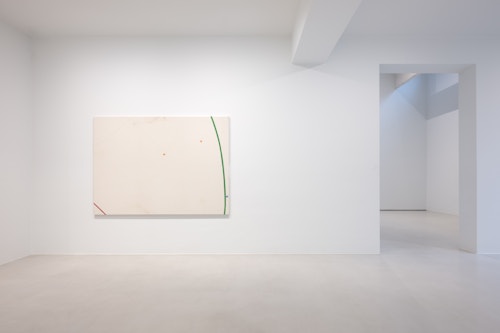
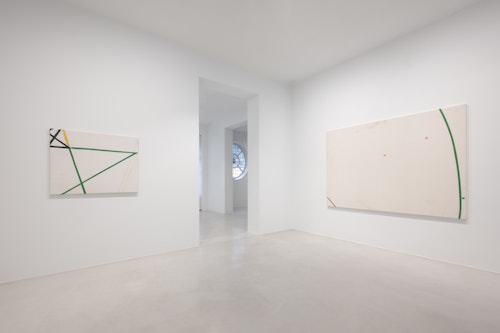
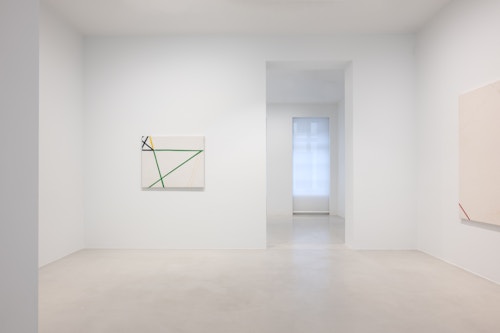
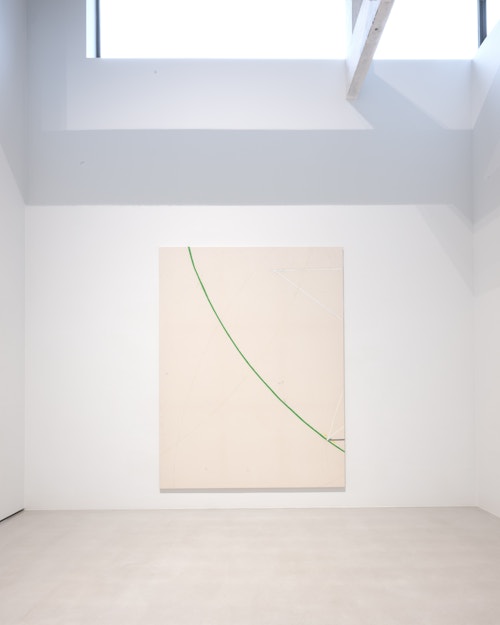
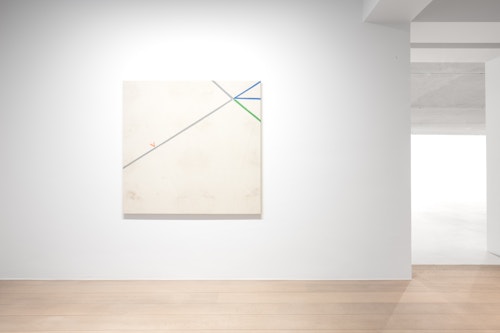
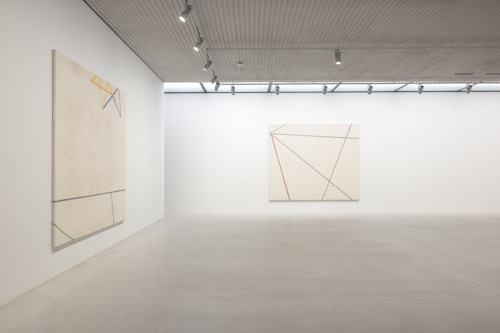
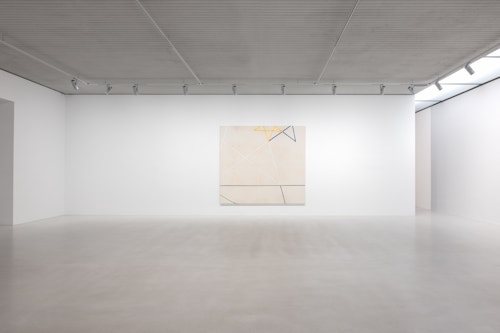
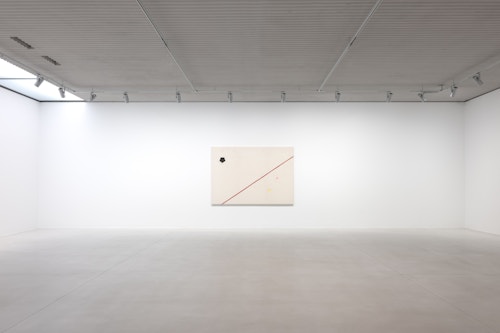
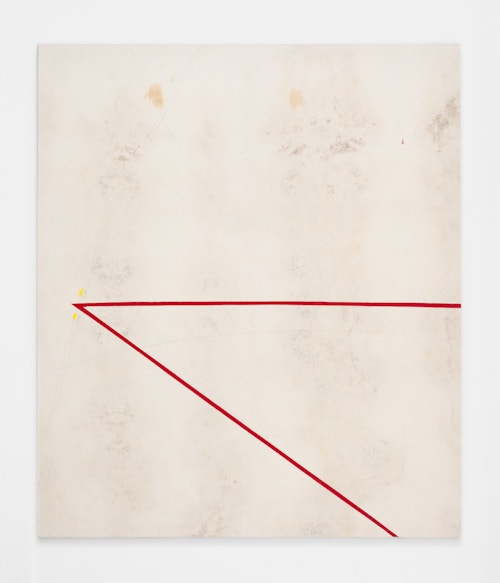
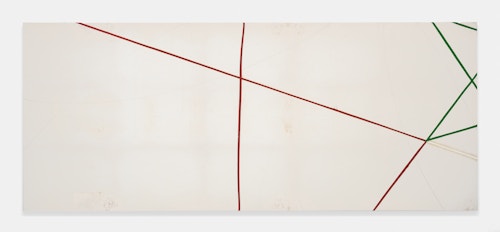
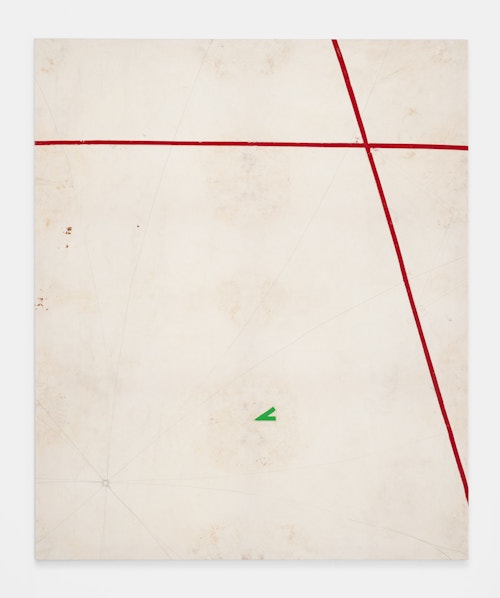
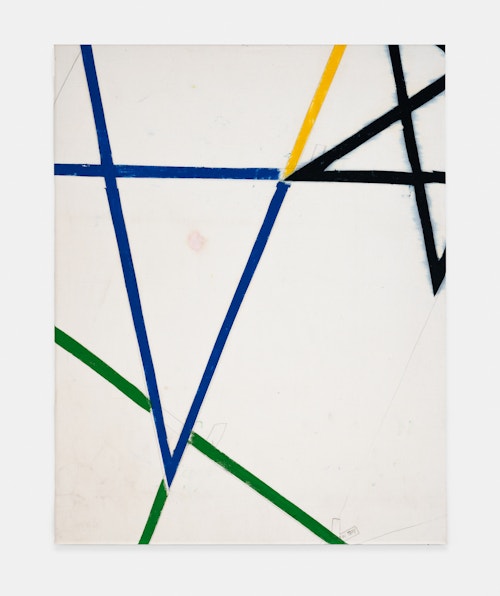
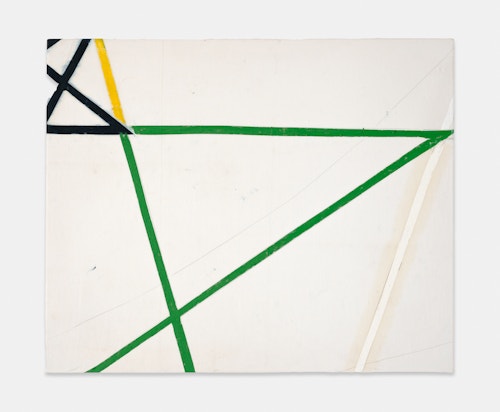
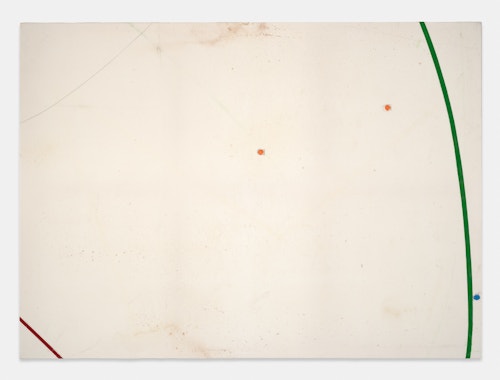
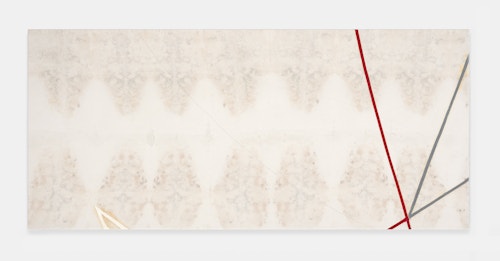
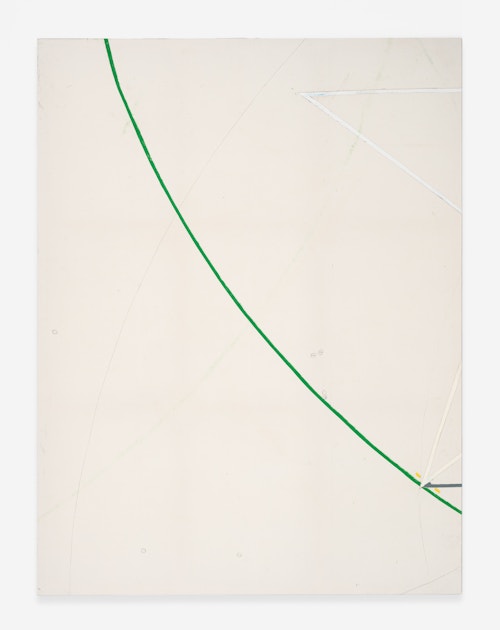
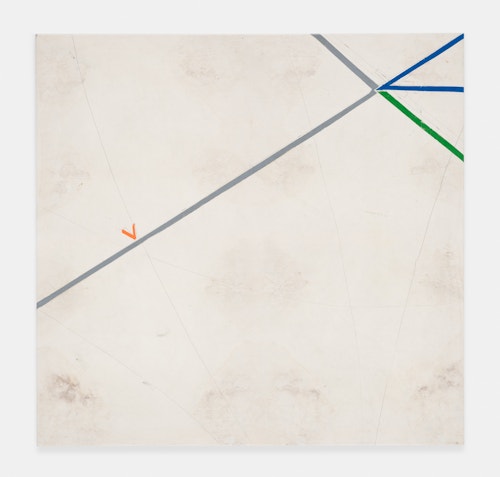
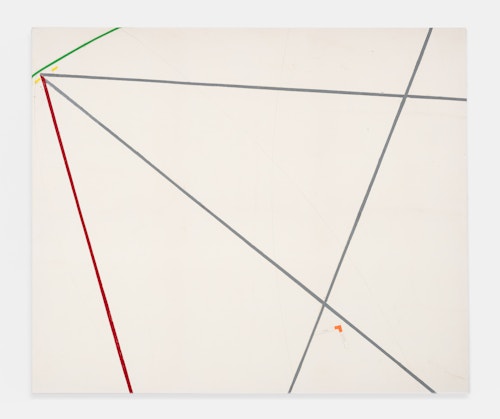
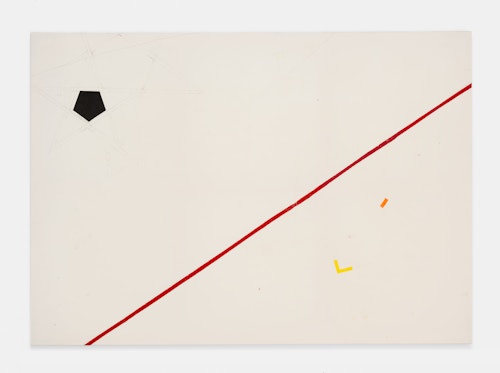
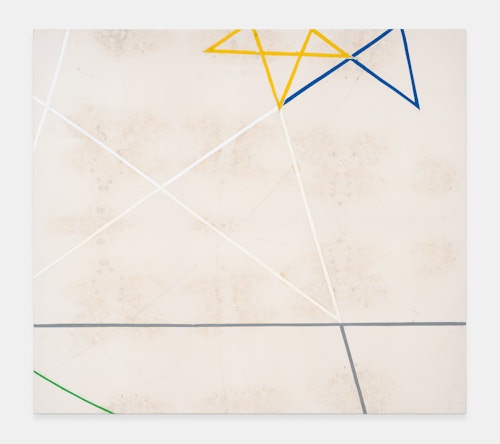
On canvas and on paper, echoes can be heard of the Goldberg Variations. More than a musical score, Bach’s work is a blueprint for De Keersmaeker’s entire oeuvre: a system of repetition and differentiation, in which choreographic labour unfolds as a continuous circling around the same (meta)physical questions and (ma)thematical figures. Geometry, long central to De Keersmaeker’s research, is more than a visual concern for her. The line appears in her work not as representation; it is choreography in its most concentrated form—the bearer of time and space. The twelve canvases that form the heart of the exhibition As you wish arise from the geometries of the dance floor. Here, lines unfold—precise and affirmative—as chromatic trajectories through space. The result is an abstract geometry that is at once functional, referential, and poetic.
Steven Fillet introduces a quiet restlessness. His oeuvre is one of freedoms bound up in contradictions. Like a chameleon, he slips between positions. Forms refuse conclusion; they linger in hesitation. In the encounter between the two artists, a shift takes place. The certainty of form gives way. What appears is a temporary instability. Geometry shifts from a closed system to an open field. What happens when order begins to waver?
Two shifts emerge. The first appears technical: the rotation from horizontal to vertical. Yet this movement signals an epistemic rupture —a change in how we see and interpret. The floor is the realm of labour, co-existence, and co-creation; lifting the canvas onto the wall situates the work within the tradition of painting. Horizontal experience transforms into vertical representation. This pivot becomes a hinge moment: a movement from action to contemplation, an attempt to let the geometry itself speak. At the same time, a second gesture emerges—intentionally accidental. The figures fragment according to the logic of their support, no longer aligned with their origin. They press against the frame, spill over its edges, while weathered canvases fray along the boundary of the recognisable. They act like imprints—reminiscent of the Shroud of Turin: traces of an absent body, images that preserve only a hint.
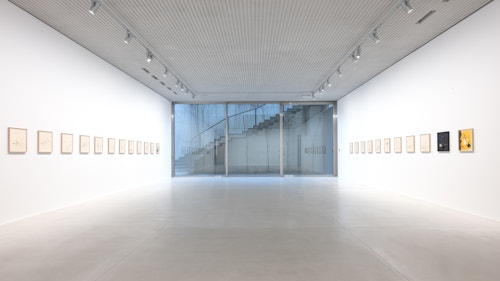
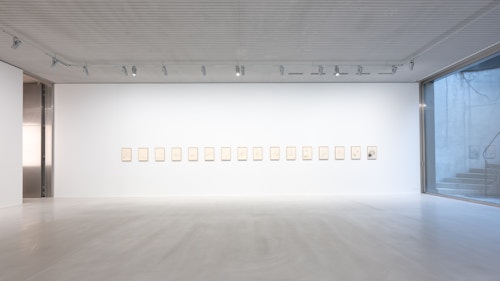
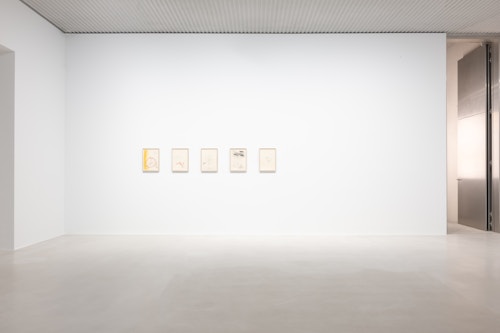
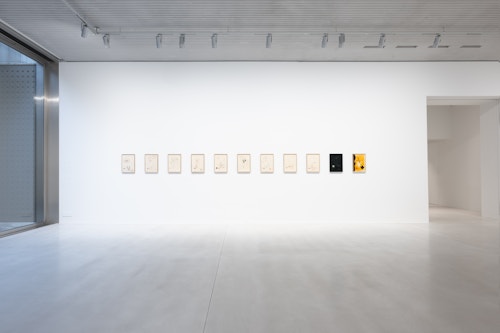
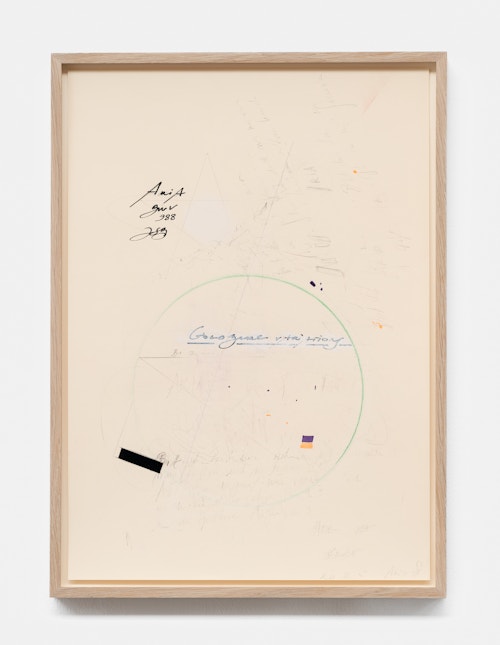
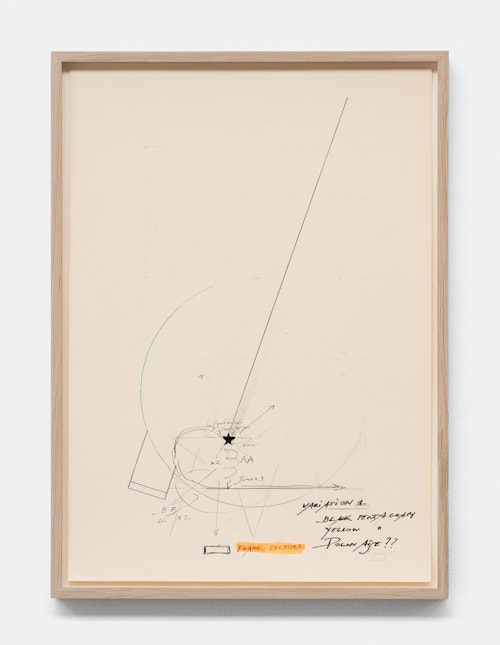
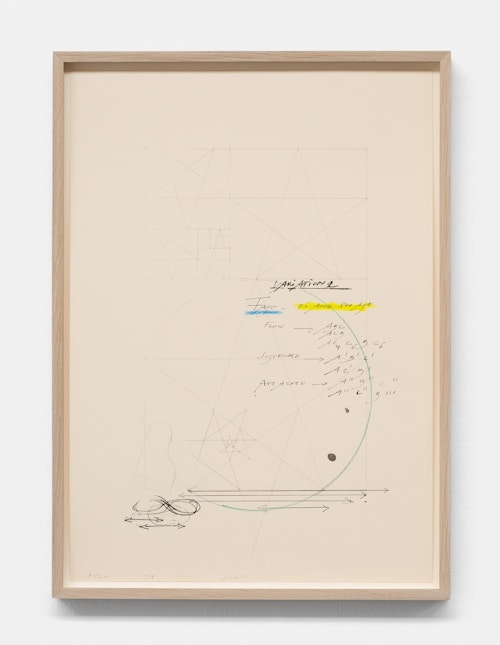
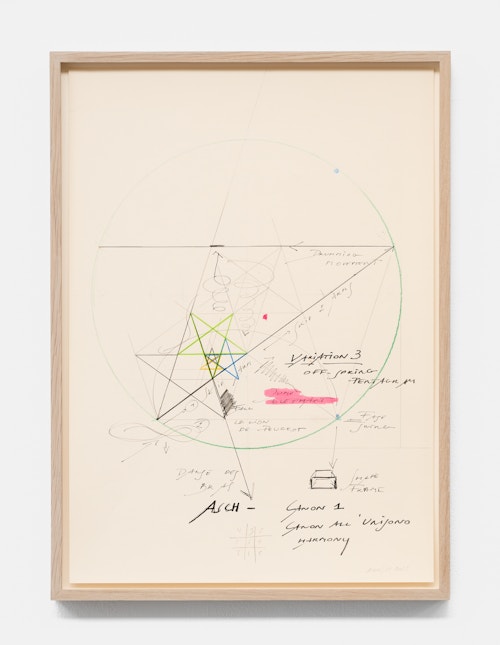
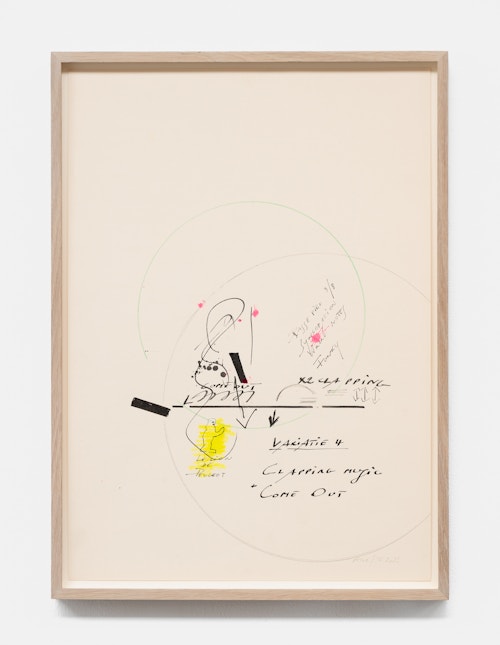
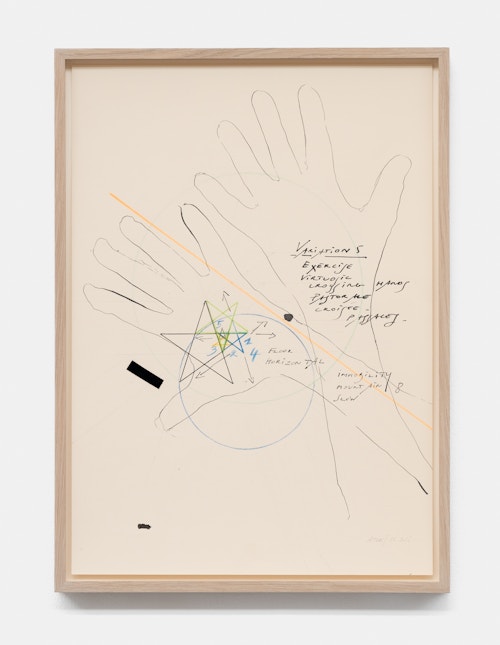
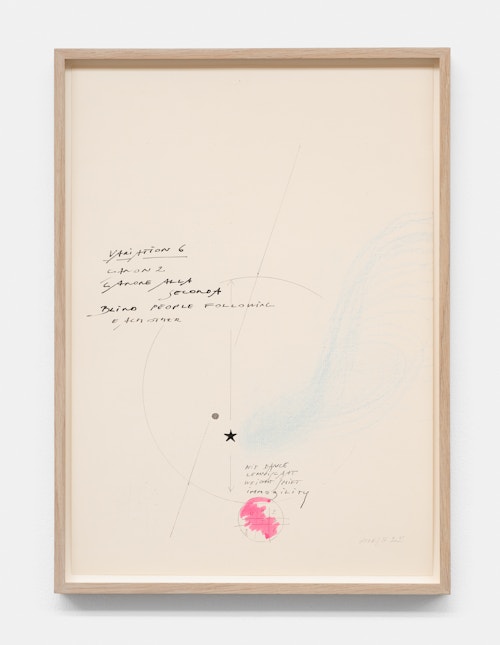
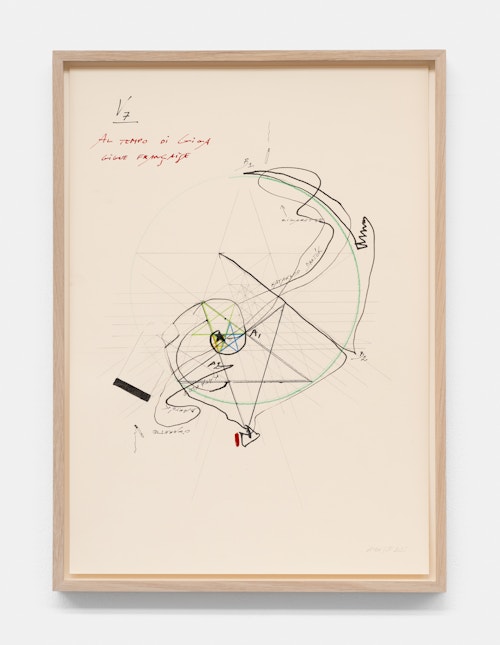
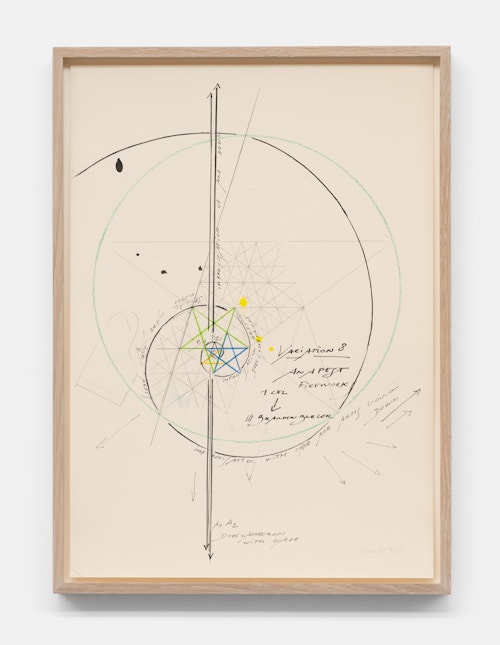
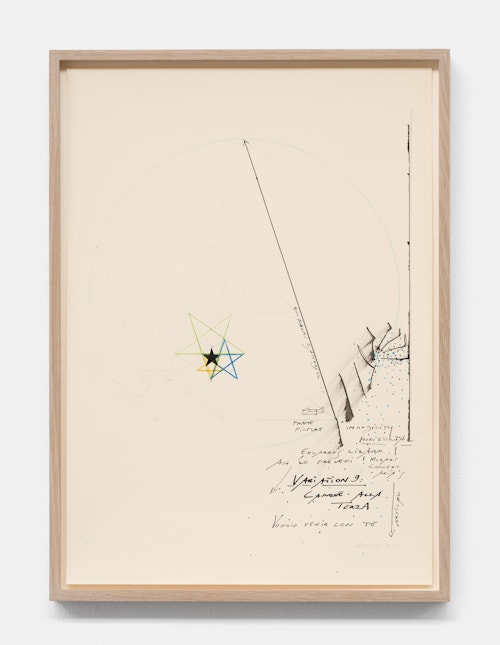
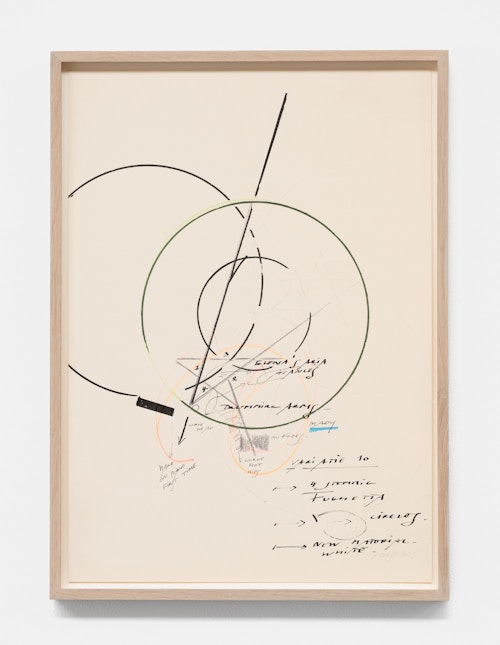
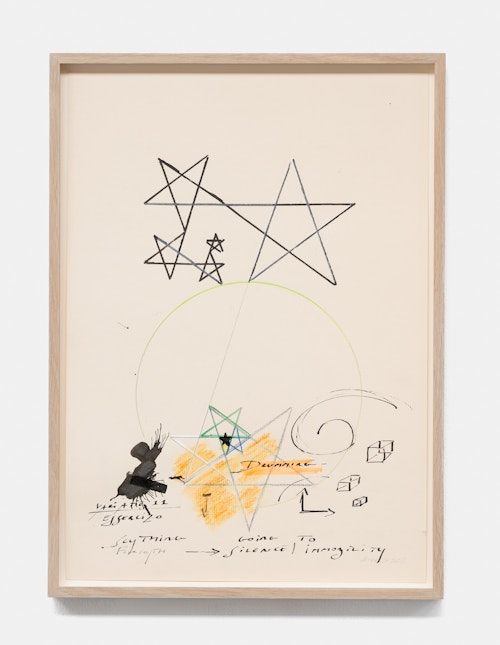
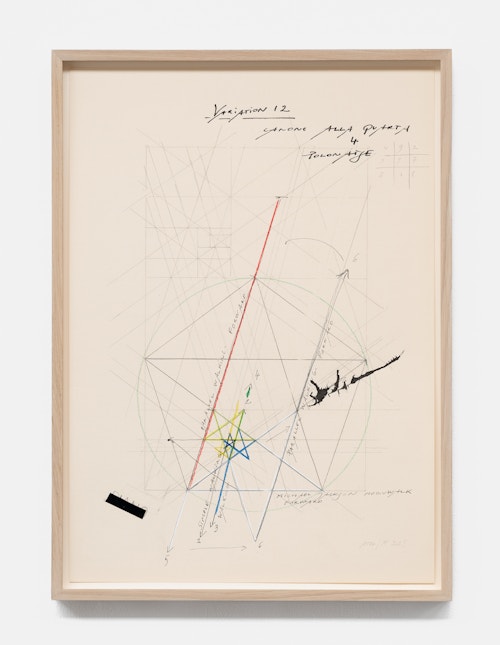
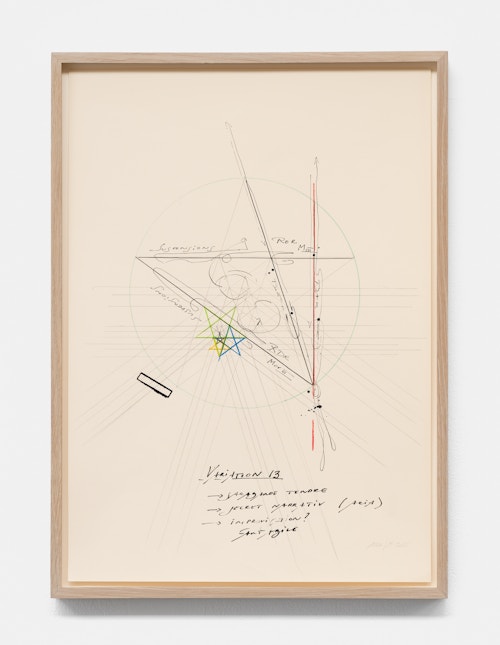
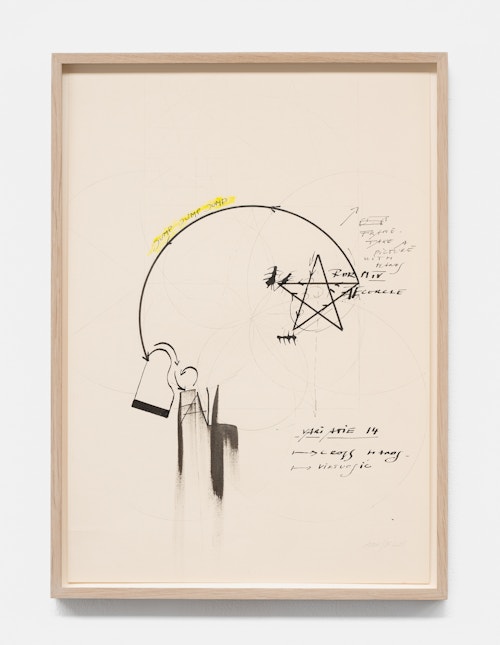
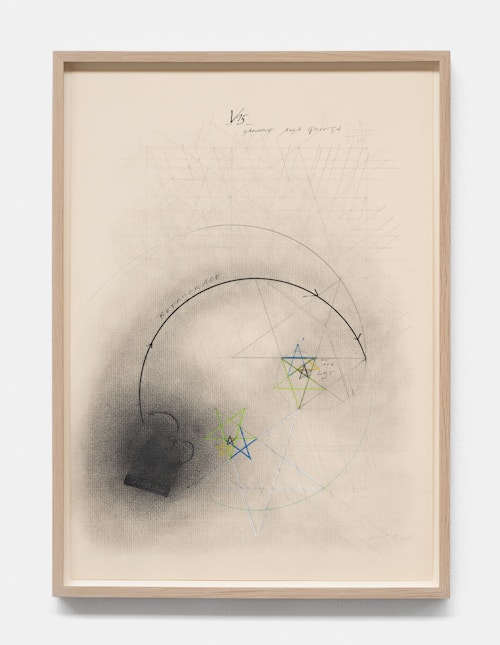
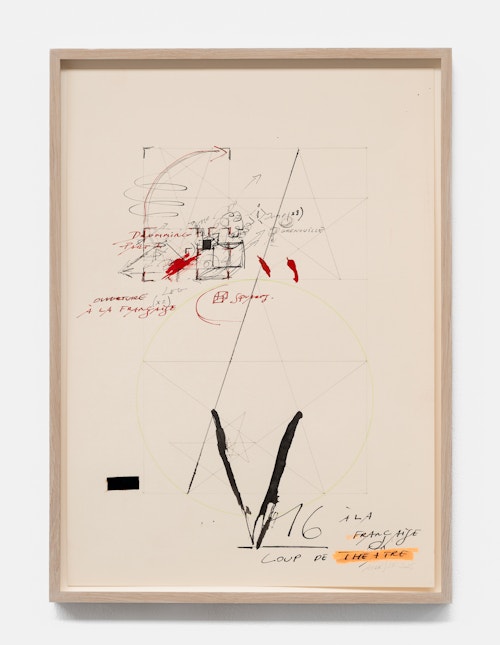
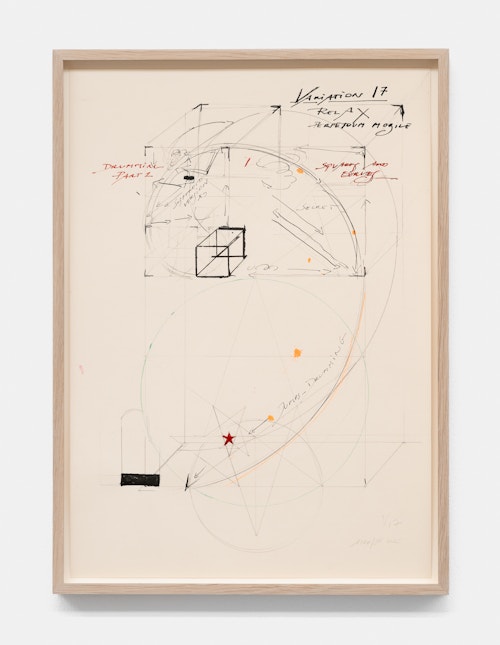
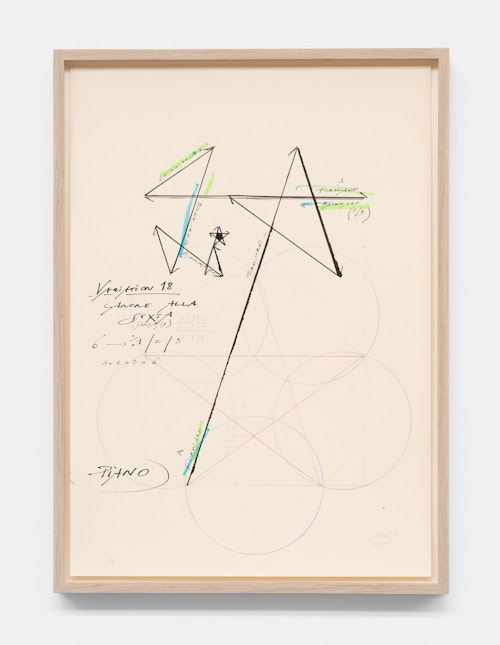
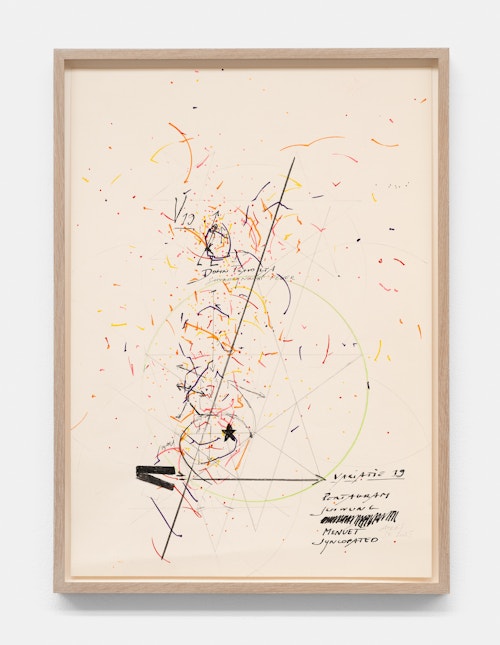
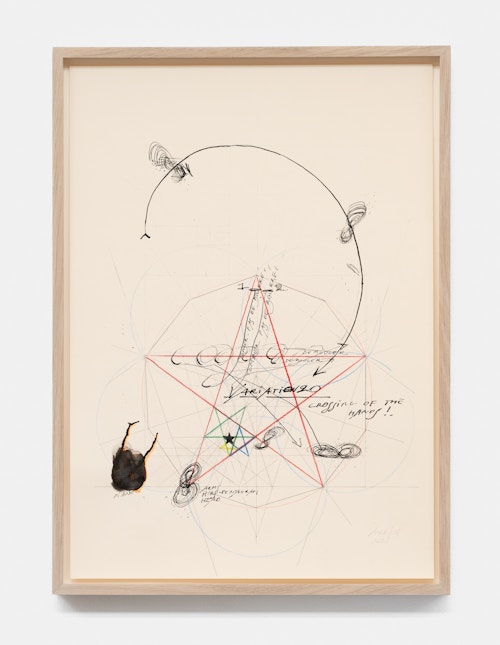
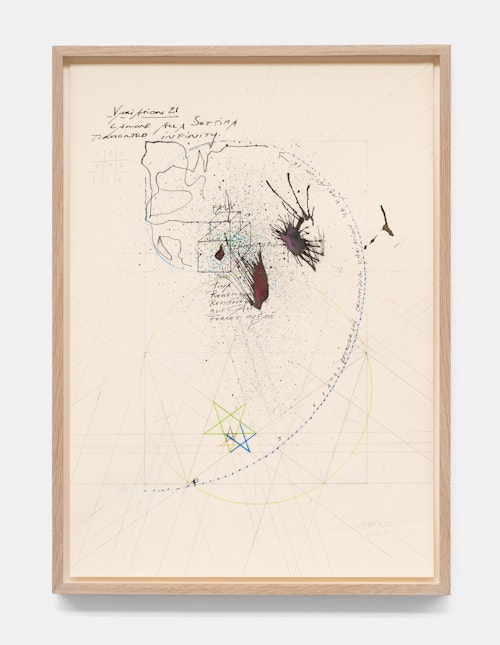
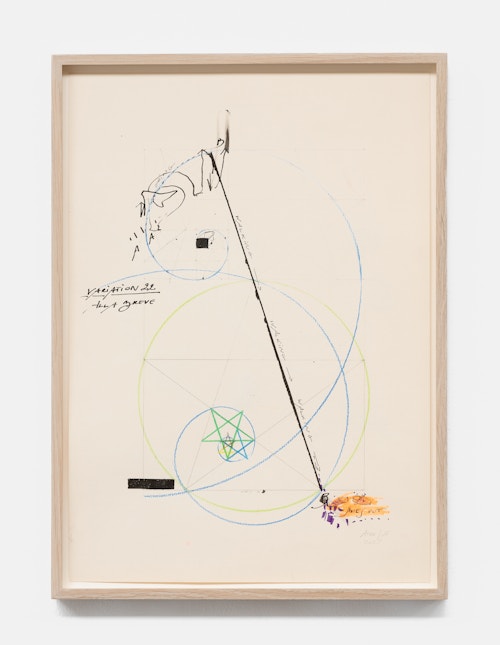
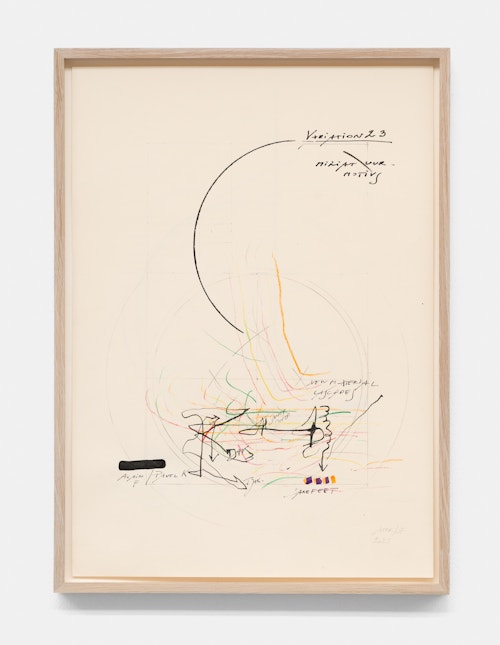
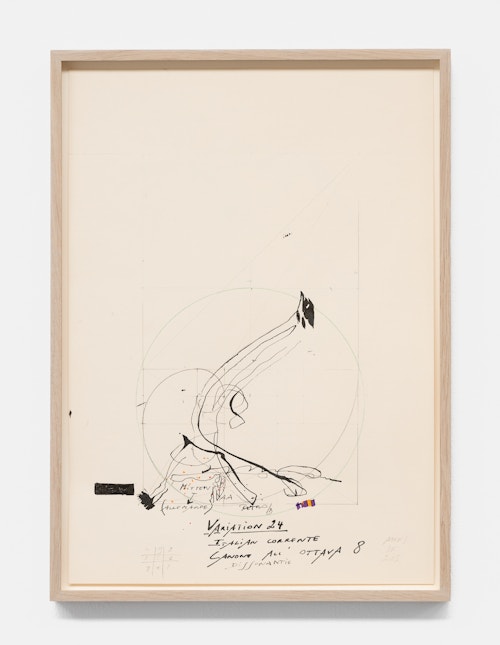
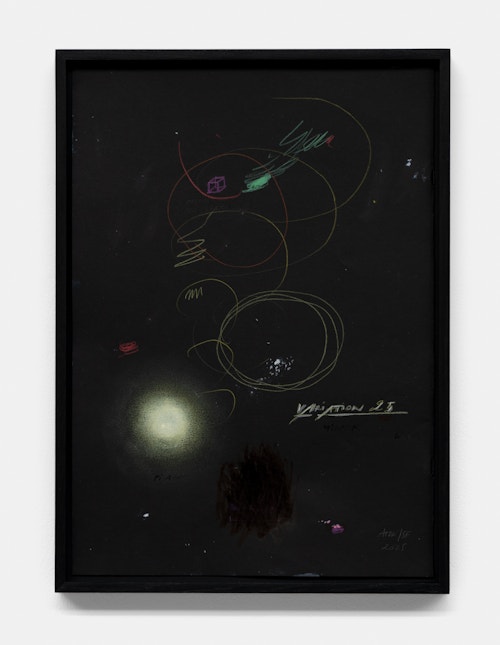
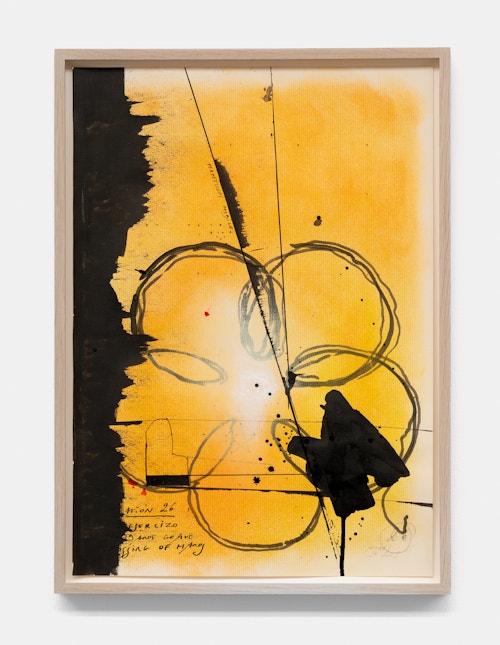
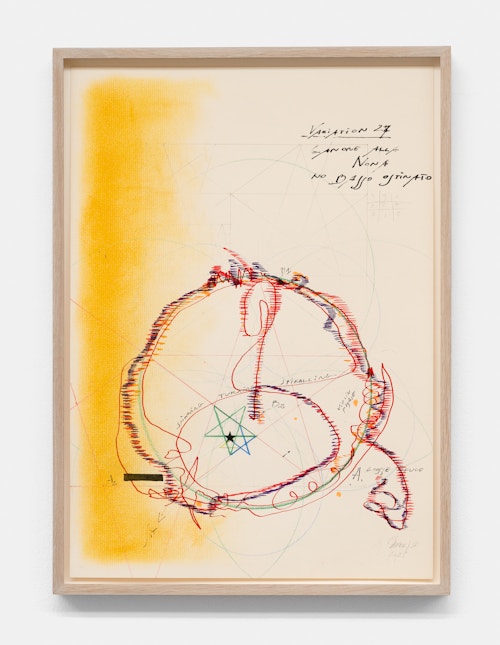
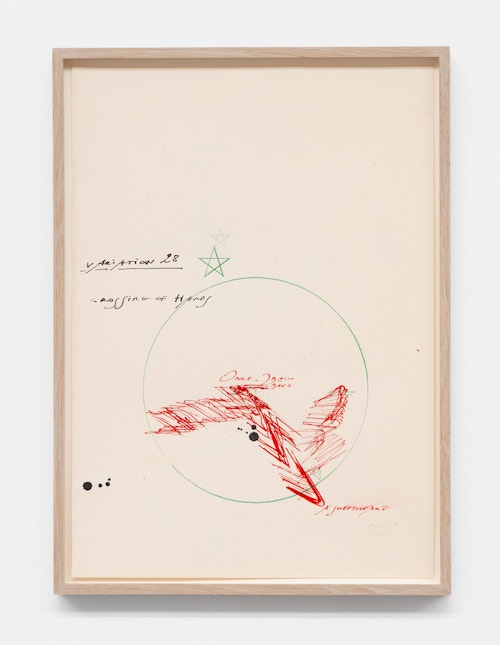
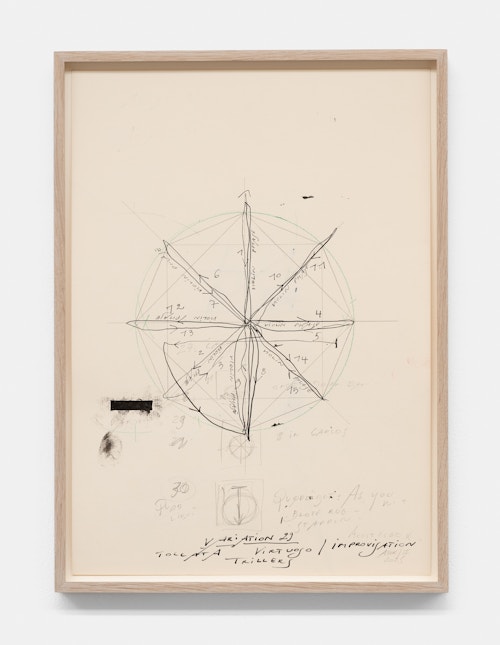
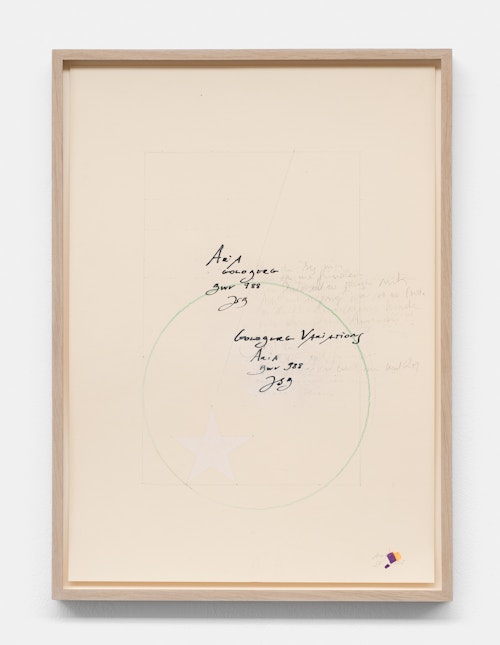
In the basement, a series of new, small drawings is displayed. They are not meant to be seen from a distance; they demand closeness and intimacy. For De Keersmaeker, drawing is an immediate, bodily form of thinking, where thought and gesture converge—a sensory reasoning in which hand tremor, movement, and the resistance of paper remain visible and tangible. Though private in nature, the drawings form both a key link in the creative process and an autonomous pictorial entity within the oeuvre. For this series, De Keersmaeker collaborated again with Steven Fillet. The drawings act as a companion score to the structure of the Goldberg Variations: compact yet layered fields, dense with texture and meaning.
¹ “I haven’t been with you so long” and “Cabbage and turnips drove me away; if my mother had cooked meat, I would have stayed”

As part of the exhibition, live performances by Anne Teresa De Keersmaeker and pianist Alain Franco took place on 5, 6, 7 February; and 12, 13, 14 February 2026.
Running in parallel with the physical exhibition, De Keersmaeker and Fillet also present Bist du bei mir, an online exhibition showcasing how their immediate surroundings resonate in their artistic process—both on a micro level, in the impressions and gestures of daily life, and on a macro level, in the larger rhythms of nature.
Anne Teresa De Keersmaeker (b.1960) began her career in 1980 after studying at Maurice Béjart’s Mudra School in Brussels and nyu Tisch School of the Arts. She created her first choreographic work, Asch, and later premiered Fase, Four Movements to the Music of Steve Reich in 1982. In 1983, she founded the dance company Rosas in Brussels, creating the landmark work Rosas danst Rosas. De Keersmaeker’s choreography is known for its rigorous exploration of the relationship between dance and music, drawing from geometry, numerical patterns, the natural world, and social structures. Her work spans various musical eras, from early music to contemporary and popular idioms.
From 1992 to 2007, Rosas was in residence at the Brussels opera house La Monnaie/De Munt, where De Keersmaeker directed several operas and large ensemble pieces. Iconic works from this period include Drumming (1998) and Rain (2001), both created with the Ictus contemporary music ensemble. In 1995, she founded the school P.A.R.T.S. (Performing Arts Research and Training Studios) in Brussels. In 2020, she created together with Ivo van Hove a new choreography for West Side Story on Broadway. Since her groundbreaking project Work/Travail/Arbeid, first presented at WIELS in Brussels in 2015, she has also continued to explore the possibilities of dance within the white cube, presenting projects at Tate Modern, London, MoMA, New York, Fondation Beyeler, Basel, Neue Nationalgalerie, Berlin, the Louvre, Paris and Hangar Bicocca, Milan, among others. De Keersmaeker’s extensive contributions to dance are documented in A Choreographer’s Score, a three-volume monograph offering insights into her creative process. In 2019, at the invitation of Collège de France, she set out to distill her artistic journey and guiding principles into a concise treatise, later published as Incarner une abstraction.
For over forty years, Steven Fillet (b.1966) has worked in the quiet margins of the institutional art world— a deliberate choice to safeguard his artistic autonomy. His oeuvre moves fluidly between figuration and abstraction, between the intimate and the monumental, never yielding to the disciplining logic of style or medium. The material contingency of his work—his preference for provisional, modest materials such as roofing felt—is not a matter of aesthetic caprice, but reflects a nomadic logic: an open, ever-shifting attitude toward form and meaning. Like nature itself, which in his work serves not as a motif but as a model, Fillet grounds his practice in a steadfast refusal of fixation.
Alain Franco (b.1964) graduated in piano and music theory in Belgium and Israel and obtained a post-master degree in xxth century Musicology at the Ircam-Ehess institute of Paris. His genuine interest for contemporary music and art, both as pianist and conductor, resulted in collaborations with leading ensembles and musicians like Ensemble Modern (Frankfurt), Ictus ensemble (Brussels), the Liege Philharmonic Orchestra, the Lyon Opera Orchestra, the Chamber Music Ensemble of La Monnaie (Brussels) and the Oh Ton ensemble (Oldenburg). In addition to that—and as an aesthetic and artistic extension to his practice—he progressively developed an original and overall reflection on representation and performance. This led to artistic collaborations with performers, choreographers and theater directors such as Anne Teresa De Keersmaeker, Meg Stuart, Thomas Plischke, Kattrin Deufert, Jan Lauwers, Romeo Castellucci, Isabelle Schad, Benjamin Vandewalle, Arkadi Zaides, Daniel Linehan and Karim Bel Kacem.

Anne Teresa De Keersmaeker and Alain Franco
Related exhibition

Selected works
![]()
Untitled, 2023
![]()
Untitled, 2023
![]()
Untitled, 2023
![]()
Untitled, 2023
![]()
Untitled, 2023
![]()
Untitled
![]()
Untitled, 2023
![]()
Untitled, 2023
![]()
Untitled, 2023
![]()
Untitled, 2023
![]()
Untitled, 2023
![]()
Untitled, 2023
![]()
Untitled (As you wish, Aria), 2025
![]()
Untitled (As you wish, Variation 1), 2025
![]()
Untitled (As you wish, Variation 2), 2025
![]()
Untitled (As you wish, Variation 3), 2025
![]()
Untitled (As you wish, Variation 4), 2025
![]()
Untitled (As you wish, Variation 5), 2025
![]()
Untitled (As you wish, Variation 6), 2025
![]()
Untitled (As you wish, Variation 7), 2025
![]()
Untitled (As you wish, Variation 8), 2025
![]()
Untitled (As you wish, Variation 9), 2025
![]()
Untitled (As you wish, Variation 10), 2025
![]()
Untitled (As you wish, Variation 11), 2025
![]()
Untitled (As you wish, Variation 12), 2025
![]()
Untitled (As you wish, Variation 13), 2025
![]()
Untitled (As you wish, Variation 14), 2025
![]()
Untitled (As you wish, Variation 15), 2025
![]()
Untitled (As you wish, Variation 16), 2025
![]()
Untitled (As you wish, Variation 17), 2025
![]()
Untitled (As you wish, Variation 18), 2025
![]()
Untitled (As you wish, Variation 19), 2025
![]()
Untitled (As you wish, Variation 20), 2025
![]()
Untitled (As you wish, Variation 21), 2025
![]()
Untitled (As you wish, Variation 22), 2025
![]()
Untitled (As you wish, Variation 23), 2025
![]()
Untitled (As you wish, Variation 24), 2025
![]()
Untitled (As you wish, Variation 25), 2025
![]()
Untitled (As you wish, Variation 26), 2025
![]()
Untitled (As you wish, Variation 27), 2025
![]()
Untitled (As you wish, Variation 28), 2025
![]()
Untitled (As you wish, Variation 29), 2025
![]()
Untitled (As you wish, Variation 30), 2025
![]()
Untitled (As you wish, Aria), 2025