Thomas Houseago Journey
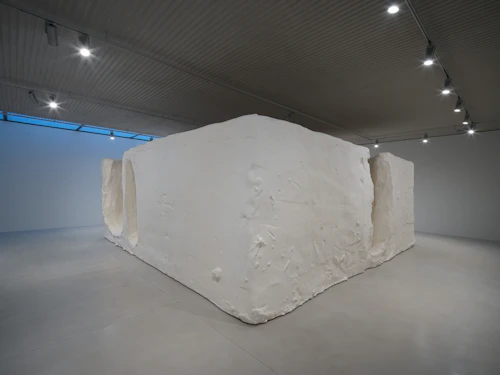
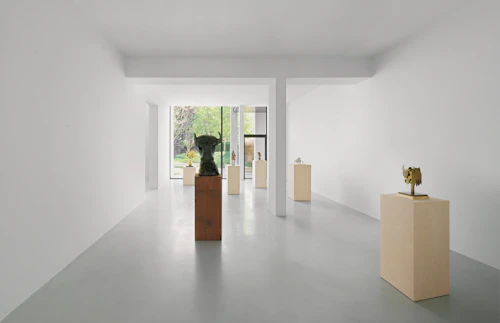
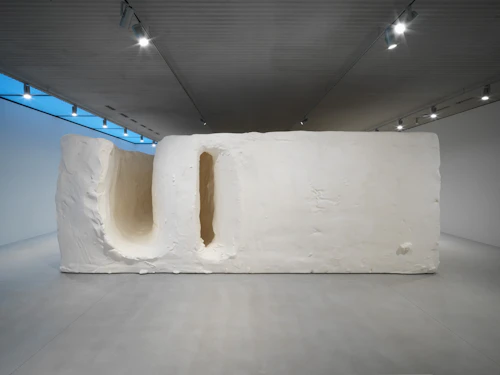
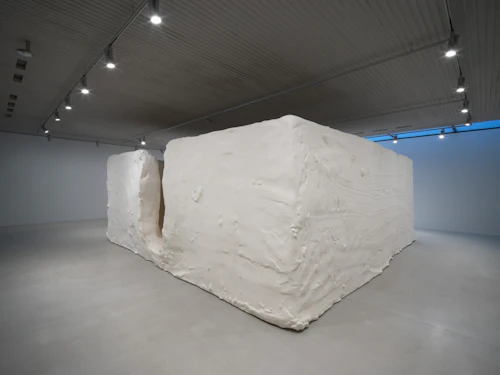
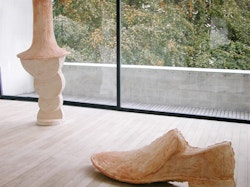
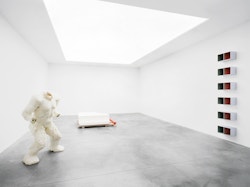
Thomas Houseago’s large-scale exhibition celebrates thirty years of collaboration with the gallery. Featuring sculptures in diverse media, including bronze, plaster, and wood, as well as different scales, the presentation encompasses both the familiar and newly emerging themes that shape his practice. An immersive installation, Cosmic Snail (Shell Temple), 2025, transforms the first floor into a space for solitude and reflection.
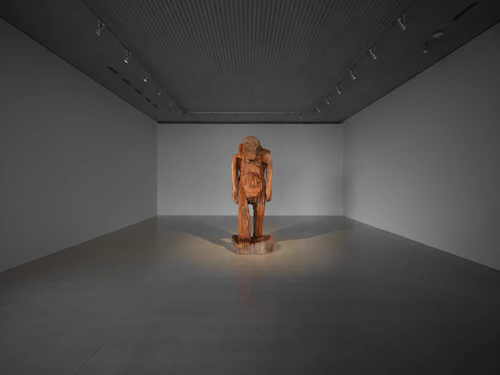
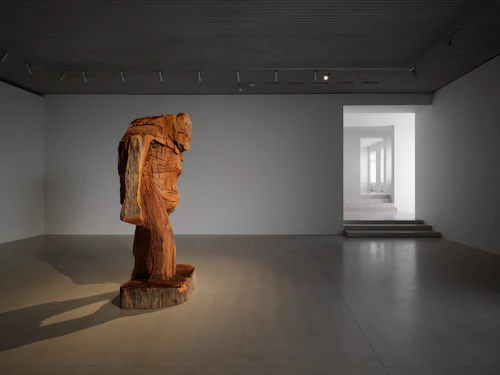
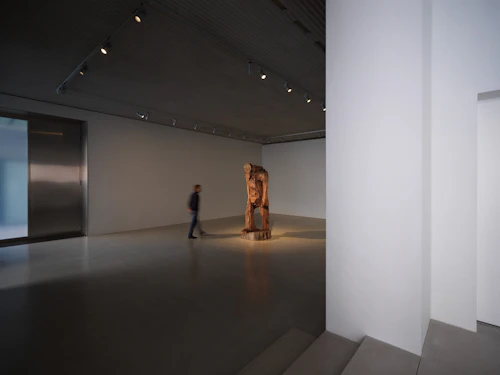
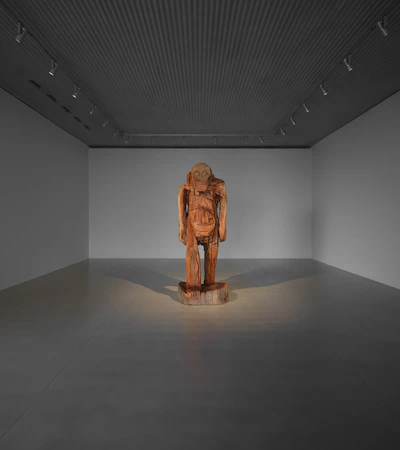
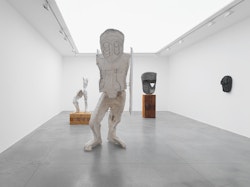
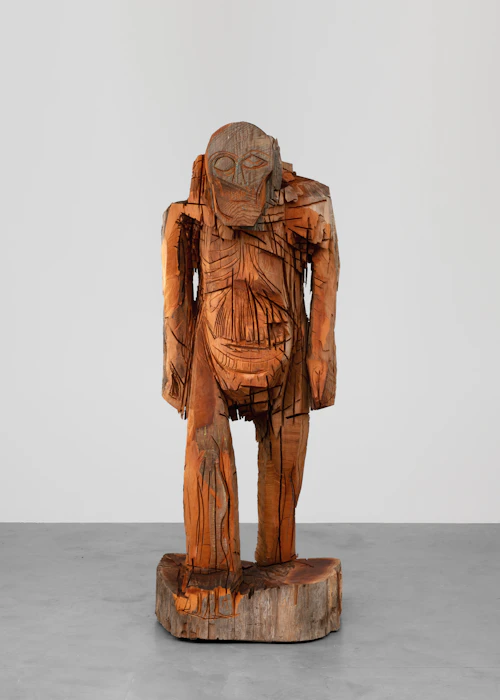
Giant Striding Figure (Van Gogh on the Road to Arles), 2025, a towering redwood sculpture, stands in splendid isolation in the first gallery. Striding figures regularly appear in Houseago’s work, suggestive of forward motion but also, conversely, of flight. These works evoke a rich art-historical tradition, from Rodin’s Homme qui marche (c. 1899-1900) to Giacometti’s similarly titled work (1960) or Bruce Nauman’s Walk with Contrapposto (1968). On the other hand, while Houseago’s earlier striding figures tended towards anonymity and universality, Giant Striding Figure pays homage to Vincent van Gogh (1853-1890), with whom Houseago feels a deep affinity.
Houseago’s Giant Striding Figure is a paradoxical figure: powerful, magisterial, and advancing, on the one hand, yet vulnerable on the other, evoked by the skull-like head and vast, vacant eyes. Carved from redwood, the sculpture forges a link with the giant sequoia trees native to the West Coast of America, where Houseago lives and works, and, through the figure of Van Gogh, between art and nature. Redwood trees symbolize strength, longevity, wisdom and resilience: their towering presence, longevity (the oldest known sequoia is over 3,200 years old) and interconnected root systems embody a deep connection to the earth, ancient knowledge and community.
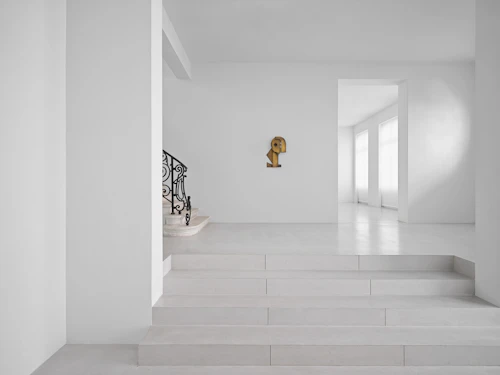
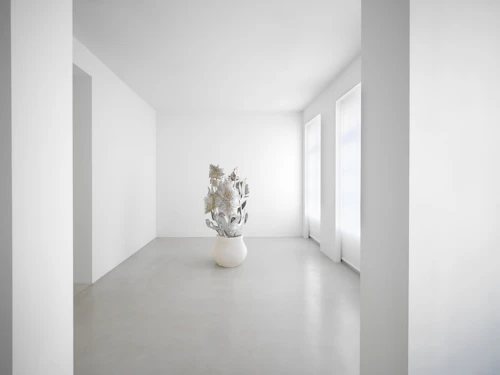
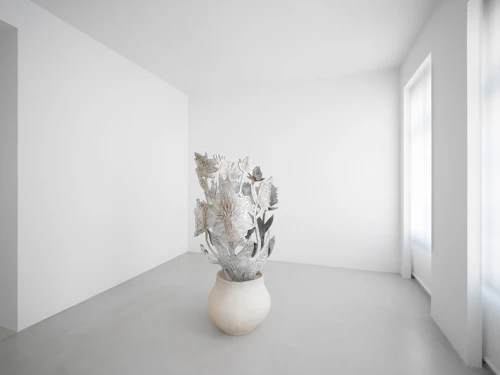
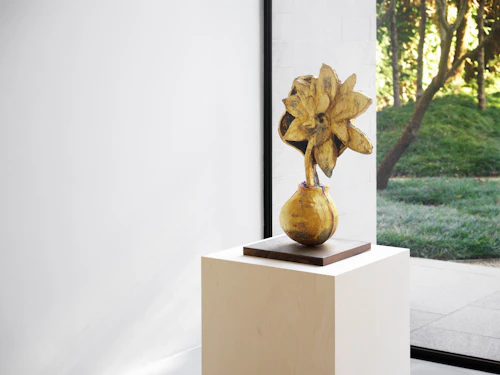
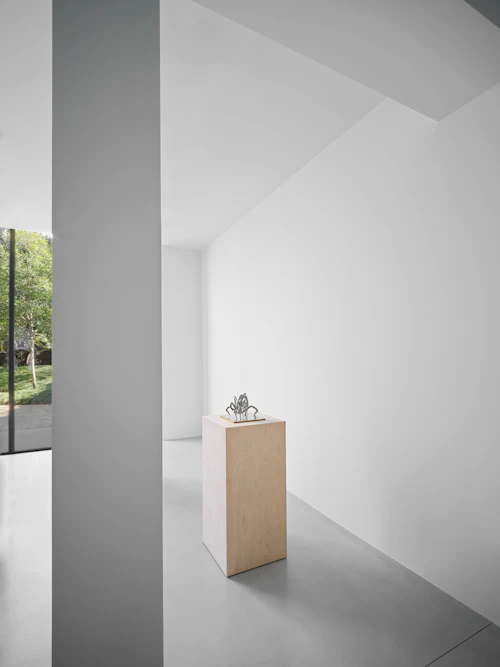
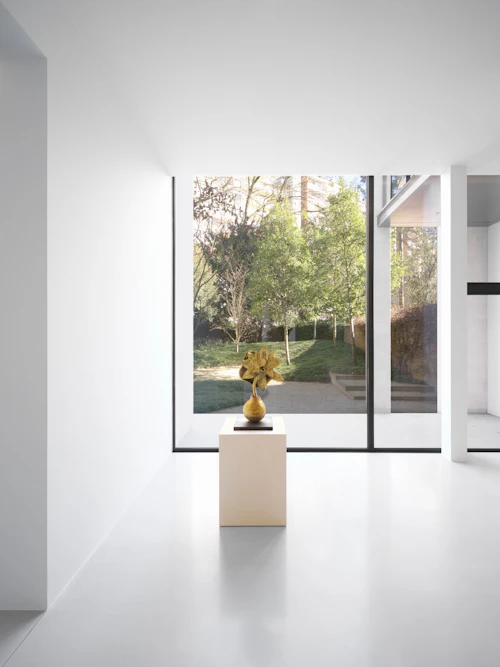
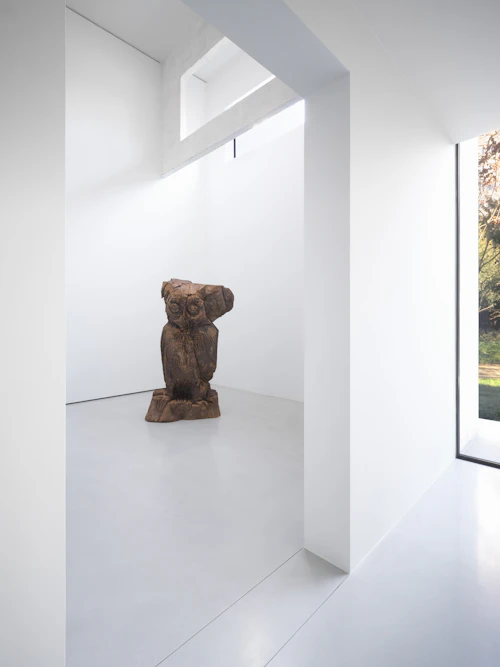
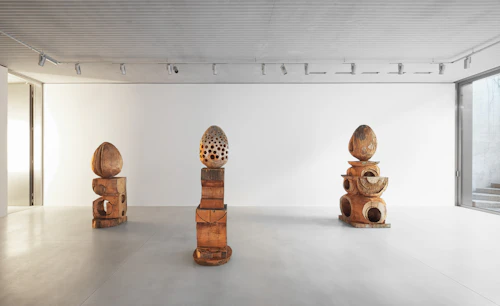
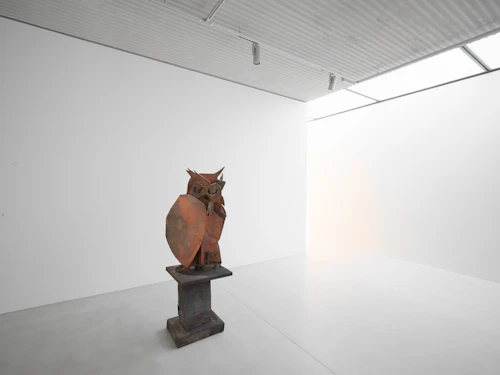
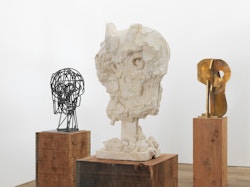
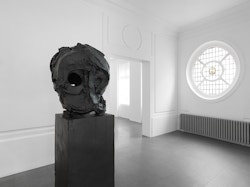
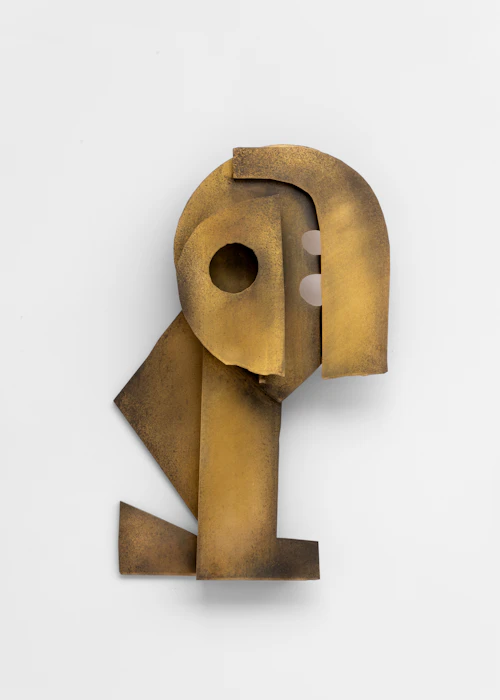
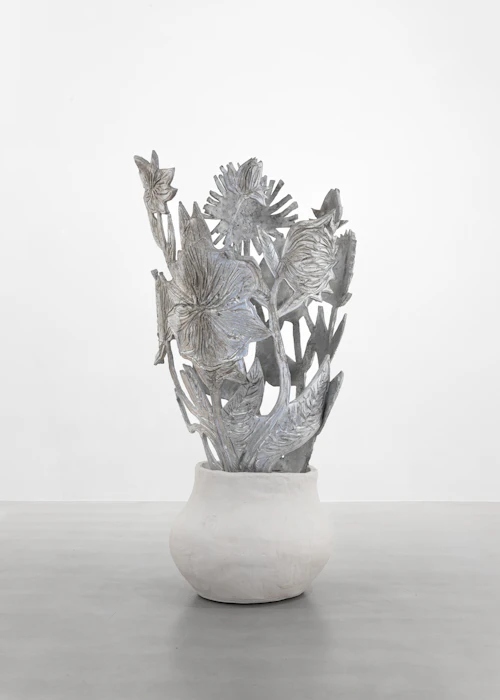
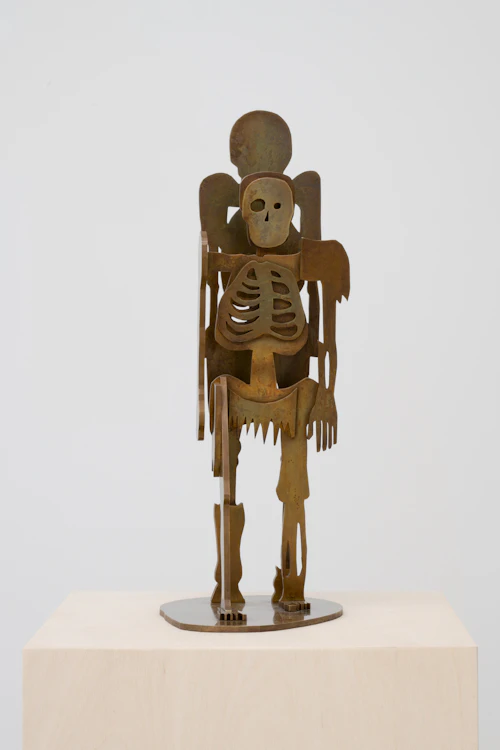
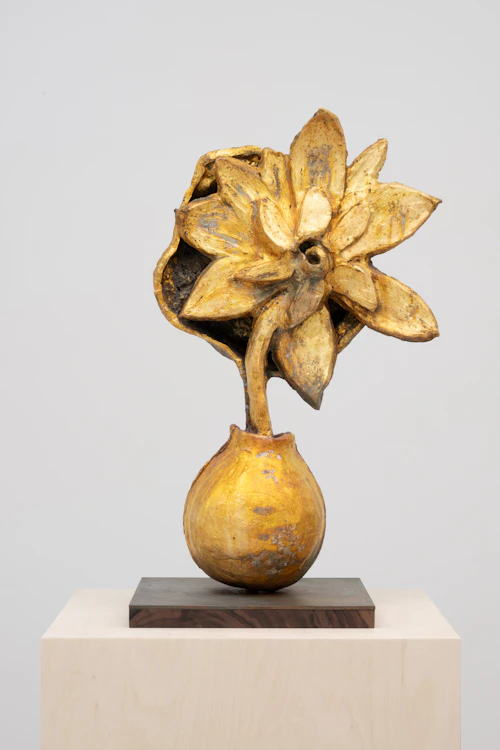
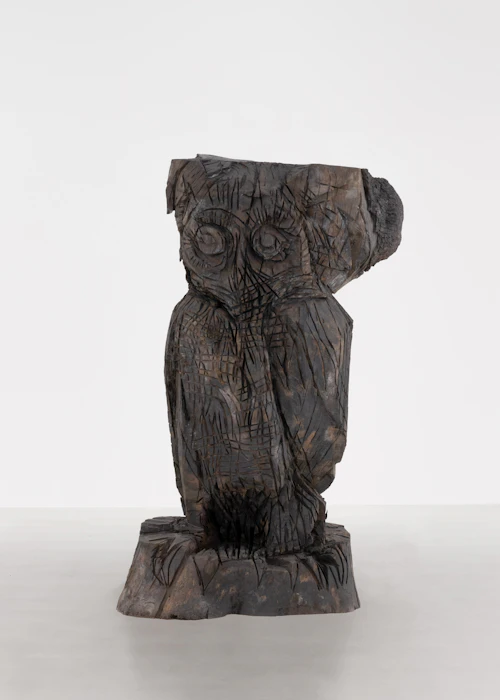
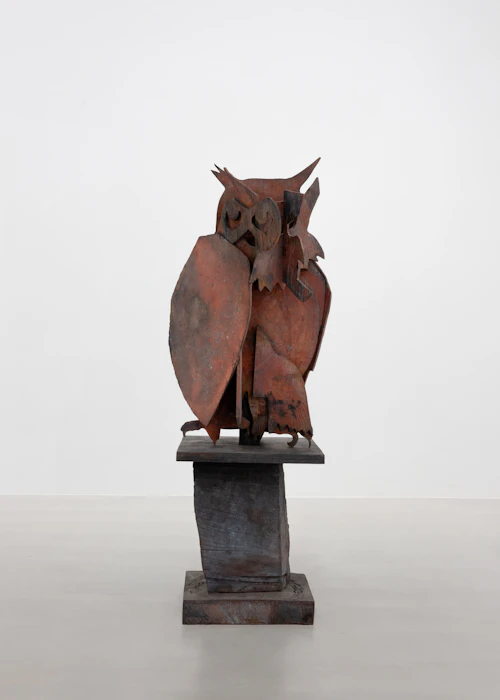
The works in the following galleries — in bronze, brass, wood, aluminium and concrete, and typically presented on redwood plinths that are sculptures in their own right — further highlight Houseago’s long-standing engagement with nature, mythology and humanity. Ranch Owl (2025) and Miraval Owl (2025) are the latest iterations in a large corpus of works dedicated to this enigmatic, nocturnal and deeply symbolic bird. Across various cultures, owls signify mystery, wisdom and vigilance. The works in these galleries exemplify key characteristics of Houseago’s practice: allowing the creative process to remain visible through tool marks (Miraval Owl); splitting and doubling (Shadow); nature and transience (Java Flower and Joy Flowers); and assembling three-dimensional forms from fragmented shapes and two-dimensional planes (Ranch Owl and Friend). This latter technique recalls the tradition of Cubist sculpture, while also reflecting Houseago’s early familiarity with British artists such as Henri Gaudier-Brzeska, Jacob Epstein and Henry Moore.

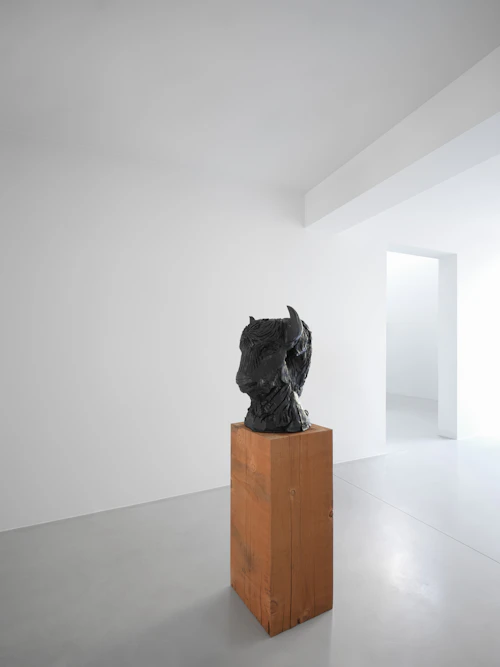
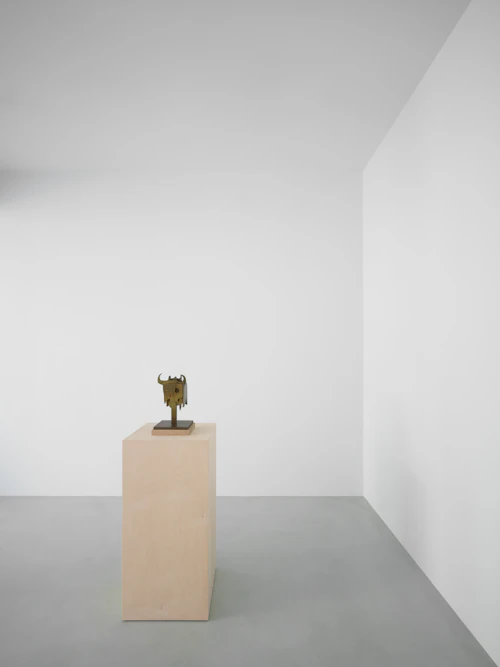
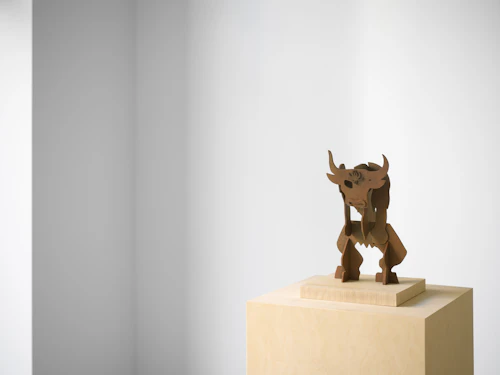
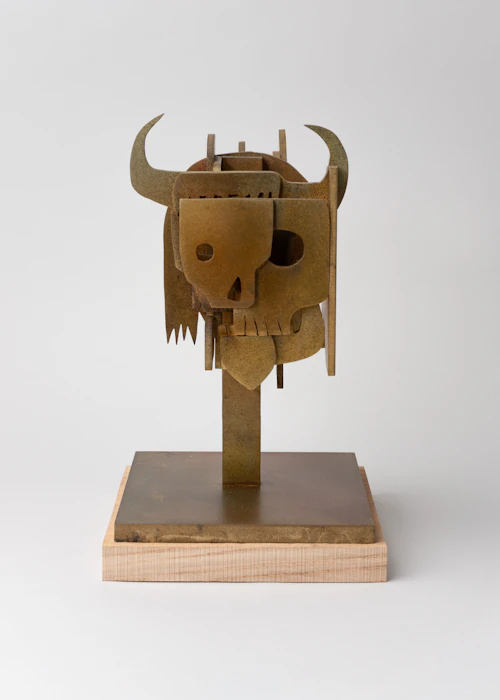
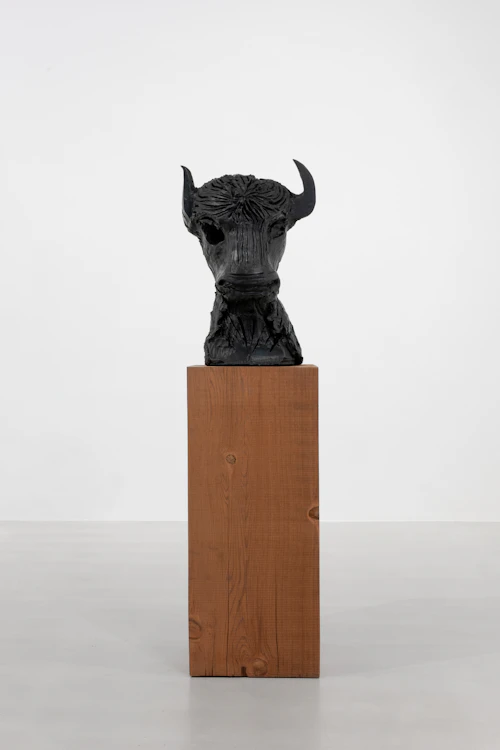
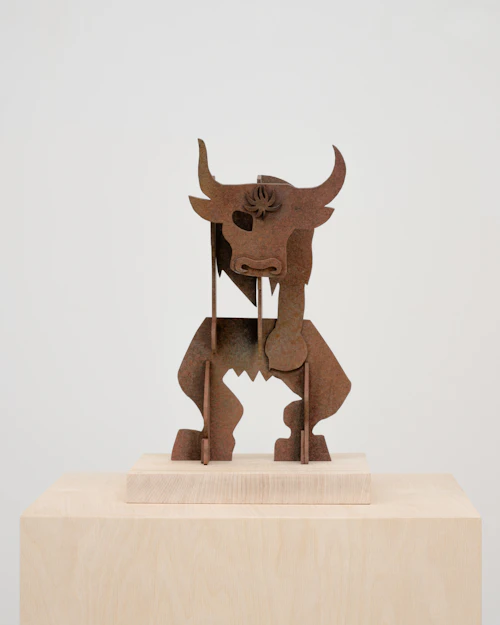
Like many artists before him, notably Picasso, the Minotaur has long fascinated Houseago. In Greek mythology, this supernatural creature — half man, half bull — dwells at the heart of the Labyrinth, the maze designed by Daedalus for King Minos of Crete. More than a monster, it has long symbolized humanity’s primal fears and repressed instincts: the ‘shadow self’ hidden in the maze of the psyche. This division also reappears in works such as Shadow (downstairs gallery): an image of dissociation that also evokes Janus, the two-faced Roman god of change and transition. As such, the Minotaur embodies the tension between reason and animal impulse, the journey of self-confrontation, and the consequences of hubris and chaos.
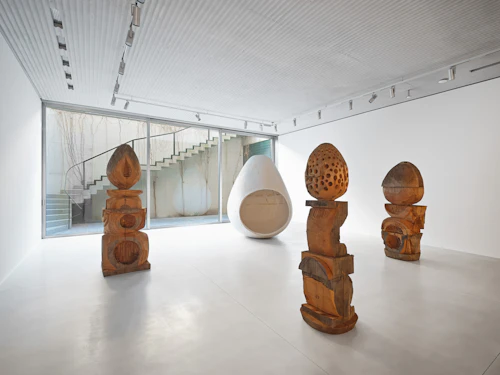
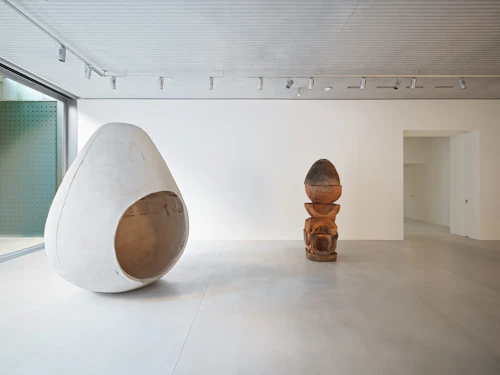
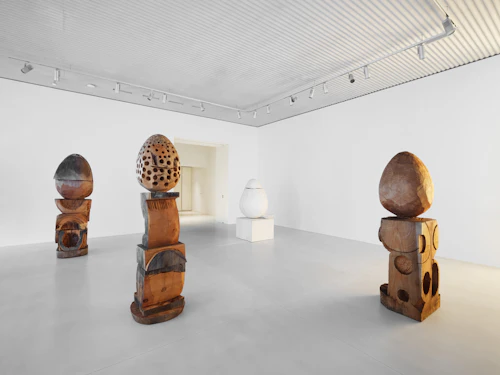
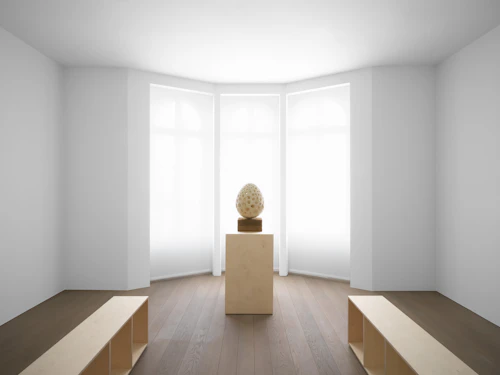
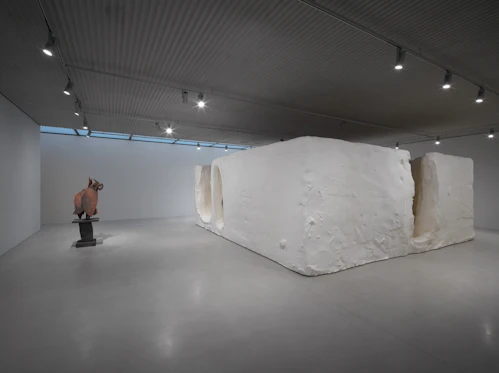
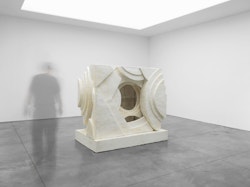
Downstairs, Houseago presents new egg-shaped works in wood and plaster. One of these, in plaster, hemp and rebar, Large Egg (For Lovers), 2025, resembles a cocoon, with just enough space to accommodate two people. Here, Houseago alludes to the cosmic egg, a motif found in creation stories across cultures. In these myths, a primordial egg hatches to form the universe or a first living being. Its shell becomes the heavens and its yolk the earth. Rooted in the life-giving qualities of an egg, the motif symbolizes birth, both fragility and protection, and the origin of all things. It too has a rich art-historical tradition, one that stretches from antiquity to the works of Brancusi, Magritte and Warhol. Yet Houseago’s eggs are cleft, sometimes sliced open or perforated, presenting a messier, less perfect vision of life.
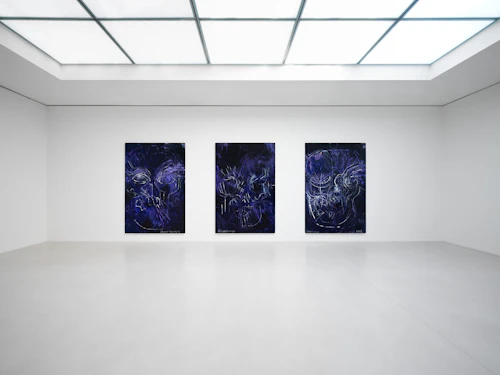
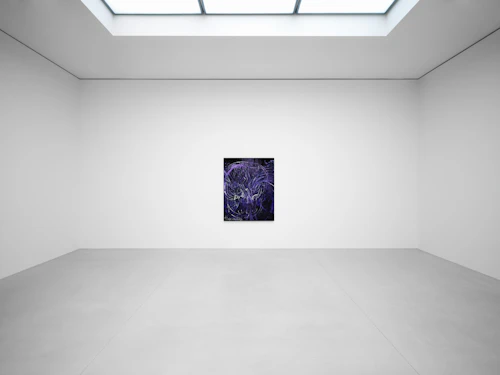
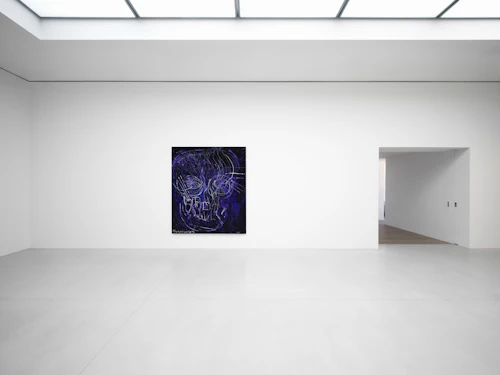
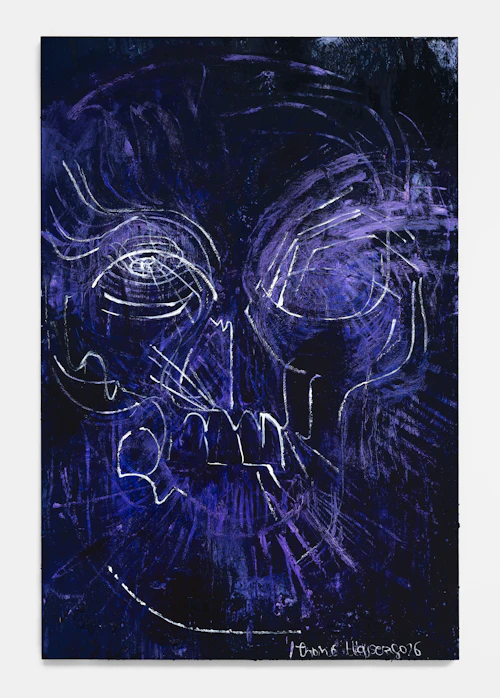
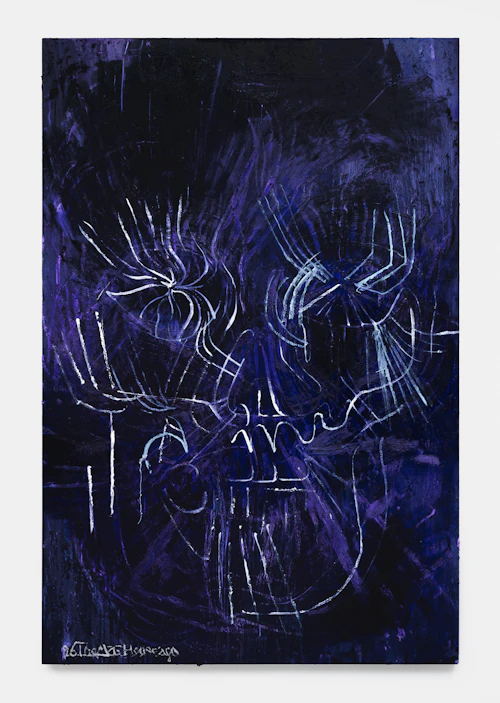
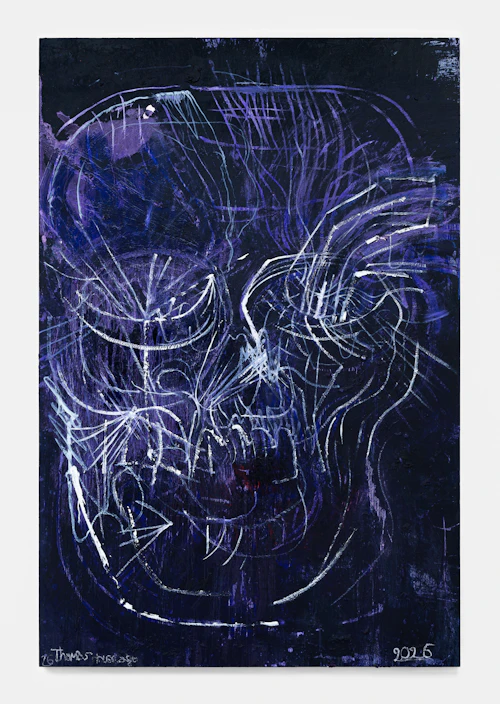
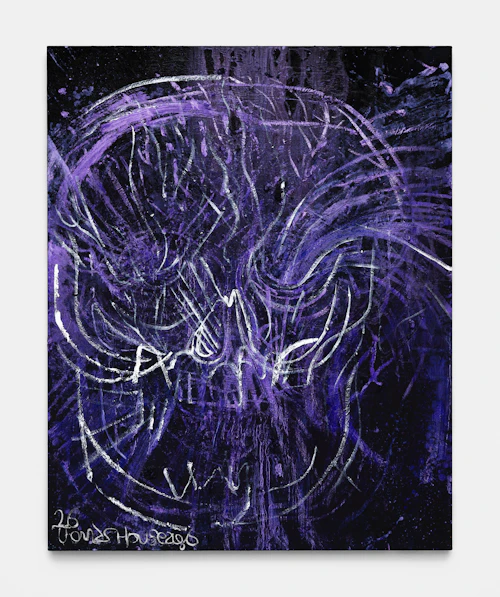
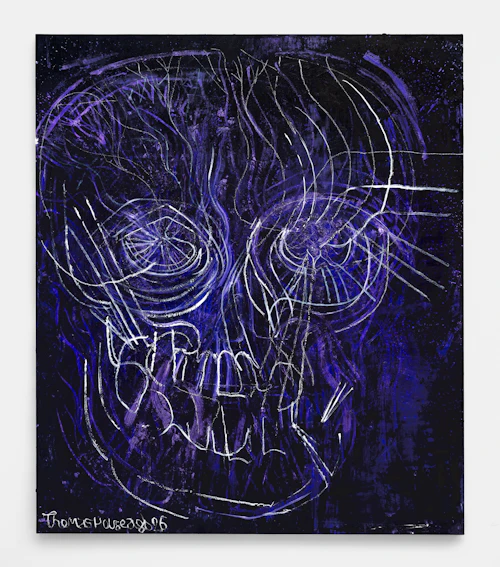
A new suite of monochrome paintings depicting skulls, a familiar motif in Houseago’s oeuvre, can be found in the uppermost gallery. In contrast to his earlier canvases on this theme, which were filled with controlled, angular lines in almost maze-like compositions, the new works are pulsating with an organic, raw, expressive energy. Skulls now float in a dark void, wherein drops of paint shimmer like stars. The motif recalls Dutch still life vanitas paintings, a warning that life is fleeting and transient. Houseago says: “Death. Everything leads to death. Everything is impermanent. Everything is being made and unmade at the same time. And there’s a tremendous fragility in that; there’s a beauty in that.” In the making of these recent works, the skull takes on more generative than morbid connotations, emerging through a repetitive process of appearance and erasure — drawing, covering up, and putting to rest — until the accumulated layers reach a point of simultaneity and calm.
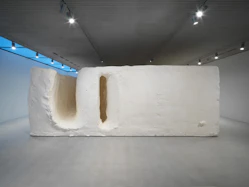
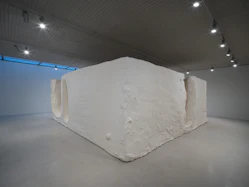
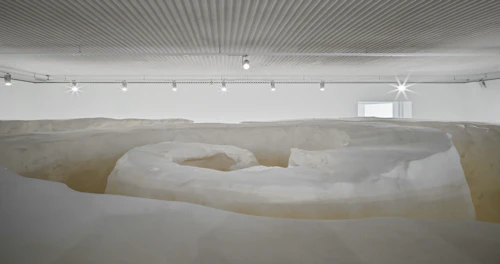
Houseago’s ambitious installation Cosmic Snail (Shell Temple), 2025, fills the first floor and invites visitors to step inside the work itself — an exploration of form and space that unfolds as a deeply personal and contemplative experience. Snails are often seen as spiritual messengers, symbolizing patience, perseverance and protection. Their spiral shells, associated with the Fibonacci sequence, evoke cycles of growth and transformation, making the creature a beguiling symbol of inner reflection and evolution. By virtue of its size and complexity, Cosmic Snail (Shell Temple) invites us to share in the artist’s inner journey, while simultaneously offering a space for private introspection.

Thomas Houseago (b. 1972, Leeds, UK) studied art at London’s Central St Martin’s college in the early 1990s before moving to Amsterdam to study at de Ateliers. He subsequently lived in Brussels for several years, where he had his first solo show with Xavier Hufkens in 1998, which launched the beginning of a long-term collaboration. In 2004, he moved to Los Angeles, where he continues to live and work. Selected recent exhibitions include Rubell Museum, Miami, FL, USA (2025); TANK Shanghai, China (2023); Centre Pompidou-Metz, Metz, France (2022); Sara Hildén Museum, Tampere, Finland (2022); Royal Museums of Fine Arts of Belgium, Brussels (2021); Musée d’Art Moderne de la Ville de Paris, France (2019); Royal Academy, London, UK (2019); Le Consortium, Dijon, France (2015–2016); and Rockefeller Plaza, New York, USA (2015).

Thomas Houseago and Roberta Tenconi
Related exhibitions
Selected works
![]()
Giant Striding Figure (Van Gogh on the Road to Arles), 2025
![]()
Friend, 2025
![]()
Joy Flowers, 2025
![]()
Untitled (Bull Head), 2025
![]()
Study for Minotaur, 2025
![]()
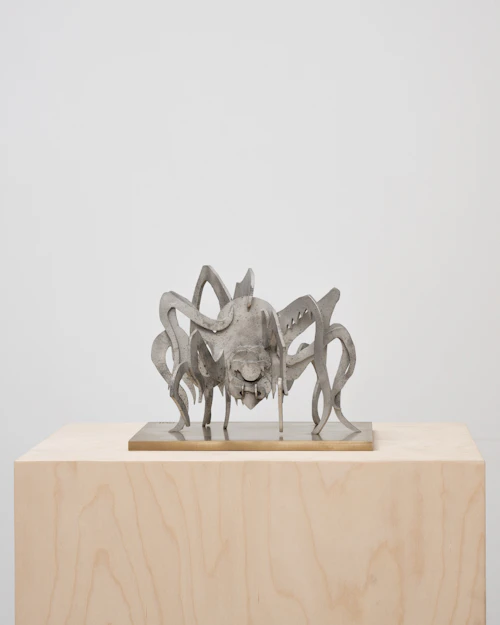
Spider, 2025
![]()
Shadows, 2025
![]()
Holy Bull, 2025
![]()
Java Flower, 2025
![]()
Miraval Owl, 2024-2025
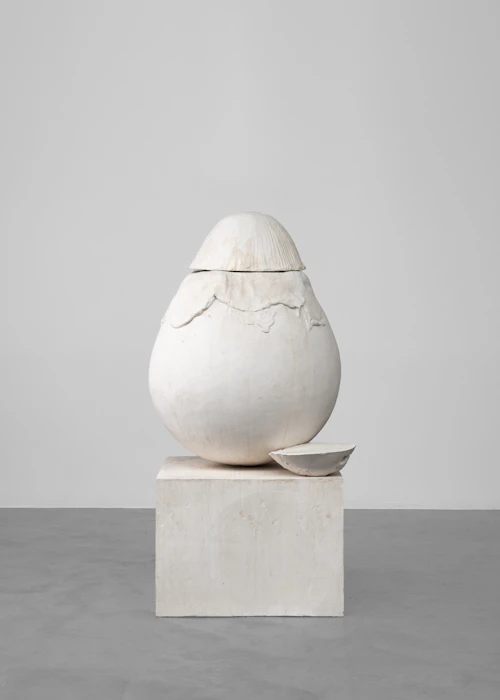
![]()
Cosmic Egg I, 2023-2025
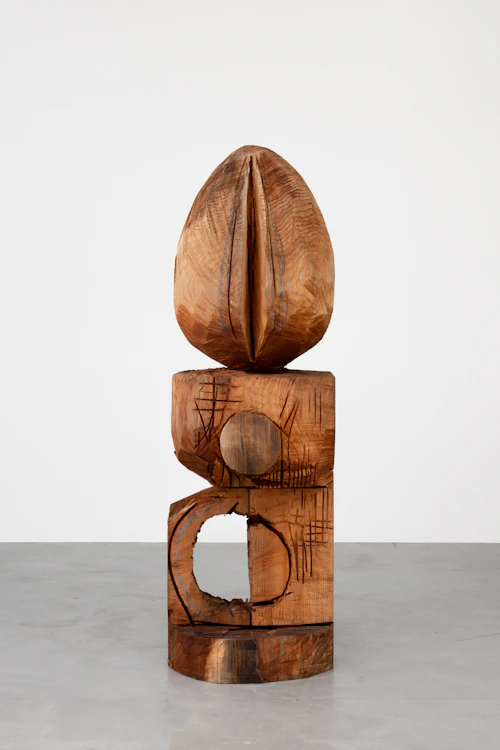
![]()
Eclipse I, 2024
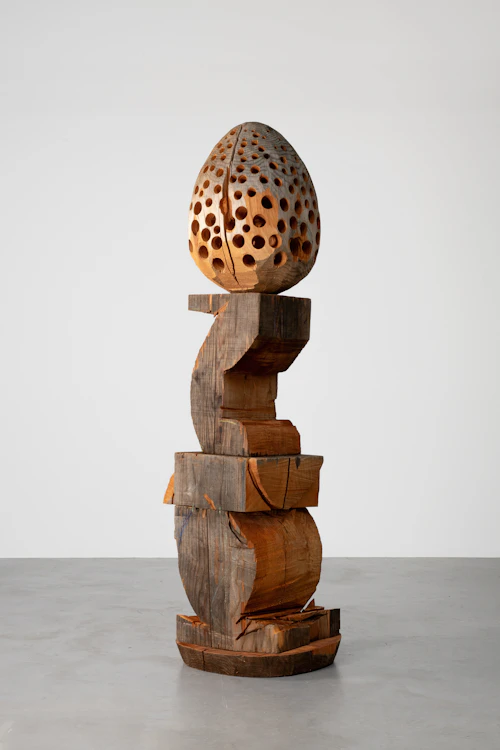
![]()
Re-birth, 2025
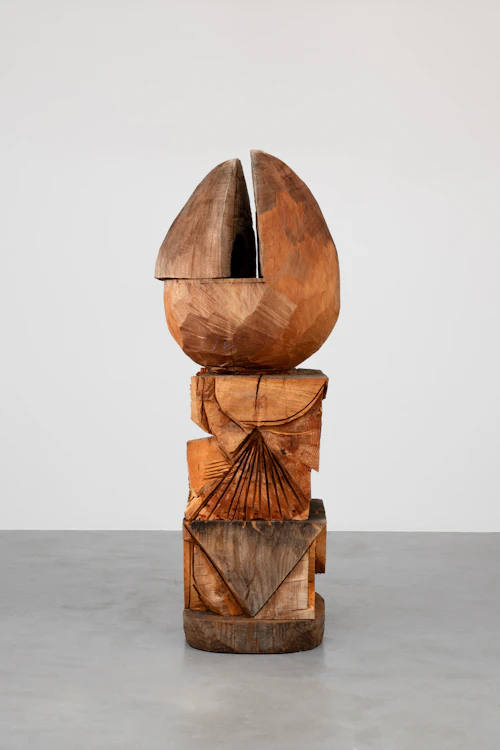
![]()
Mystery Egg I, 2025
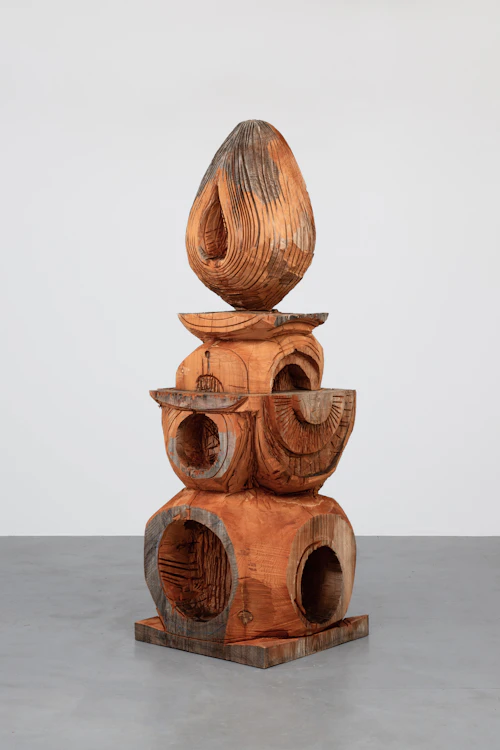
![]()
Mystery Egg II, 2025
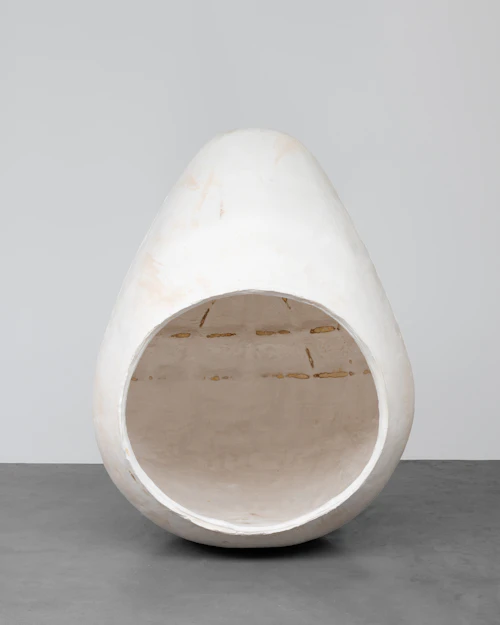
![]()
Large Egg (for Lovers), 2025
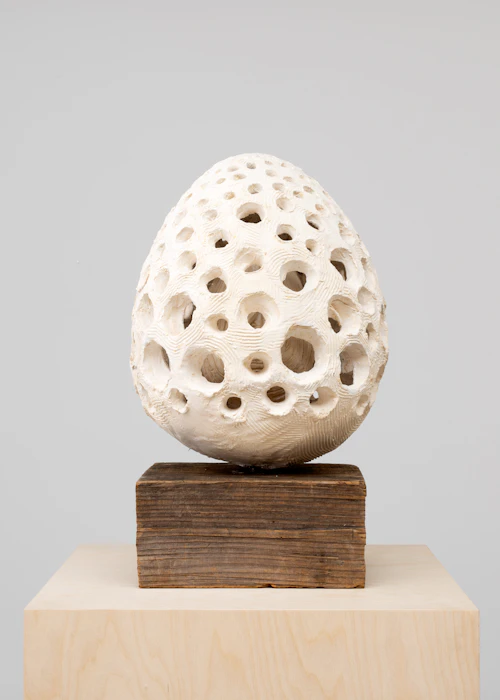
![]()
Java Egg, 2025
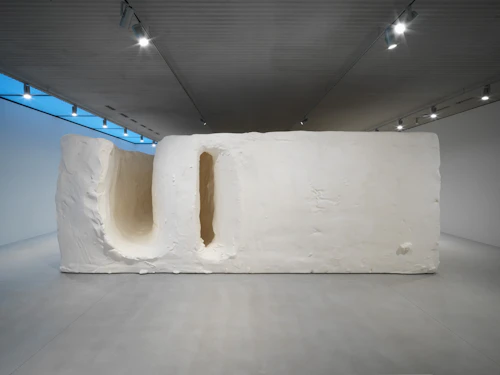
![]()
Cosmic Snail (Shell Temple), 2025-2026
![]()
Ranch Owl, 2024-2025
![]()
Memory Paintings (purple mirror) III, 2026
![]()
Memory Paintings (purple mirror) II, 2026
![]()
Memory Paintings (purple mirror) I, 2026
![]()
Memory Paintings (purple mirror) VI, 2026
![]()
Memory Paintings (purple mirror) V, 2026